Books
Technologies
Material Histories
Technologies
Material Histories
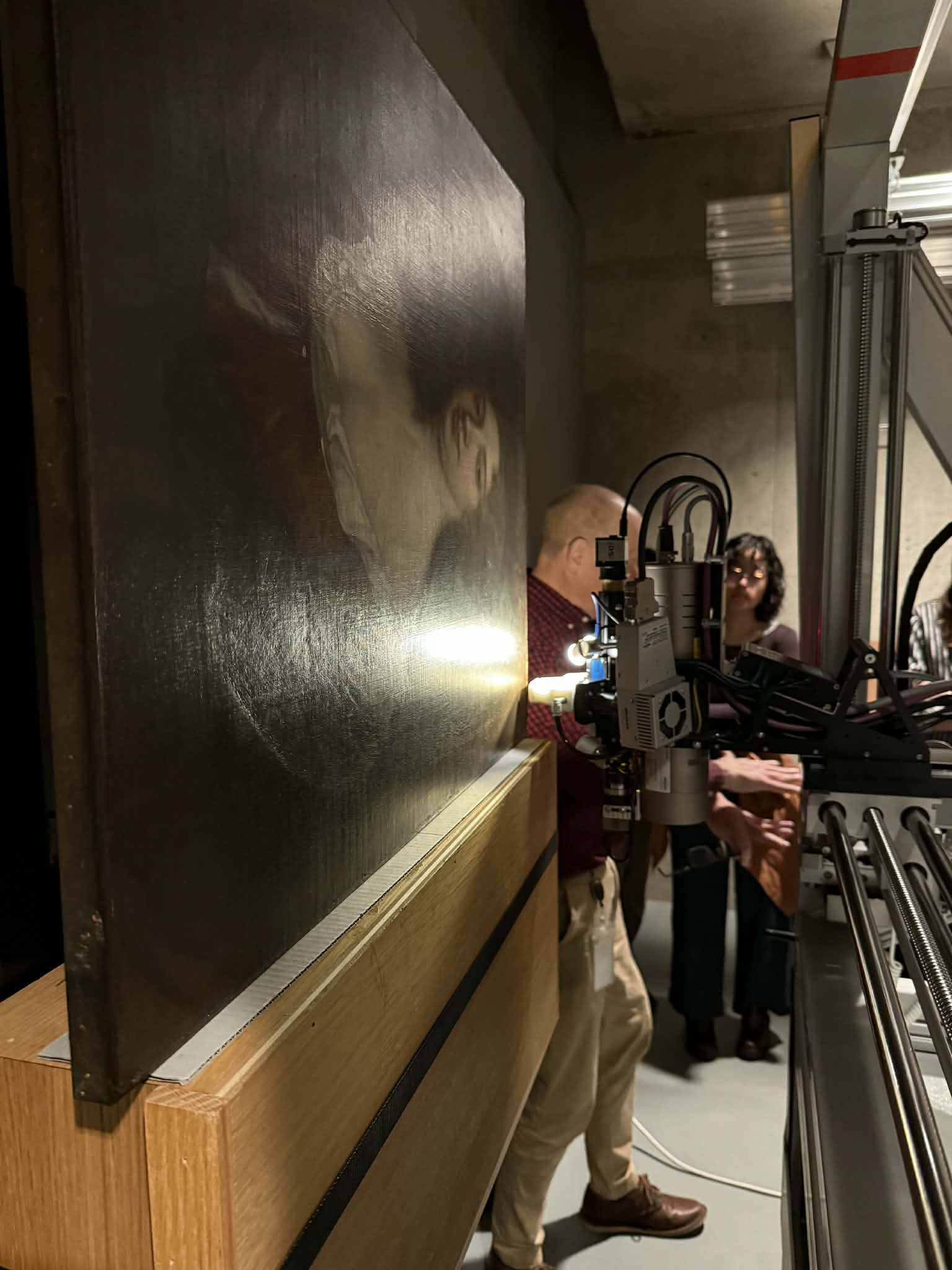
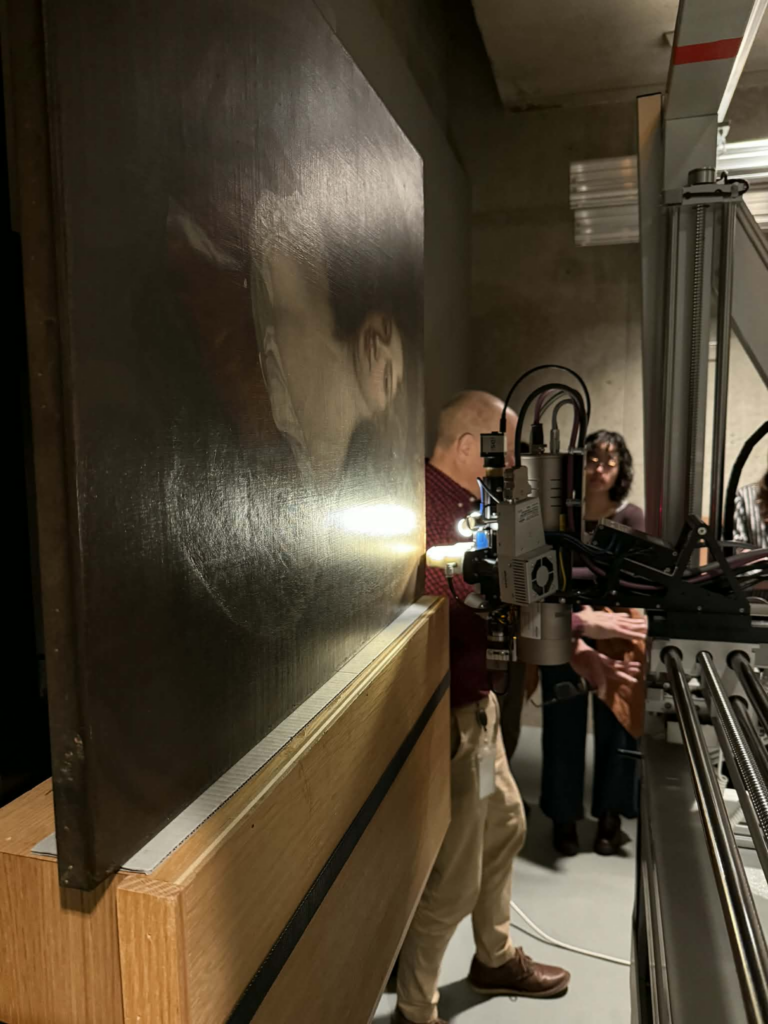
On Friday the 13th of February we started our day at the Yale Center for British Art (YCBA). We were warmly welcomed by the conservation staff there who showed us how they incorporate analytical testing in their approaches to conserving paintings. We then went to their analytical room to watch the M6 Scanning X-ray Fluorescence machine in action scanning a portrait (the image below).
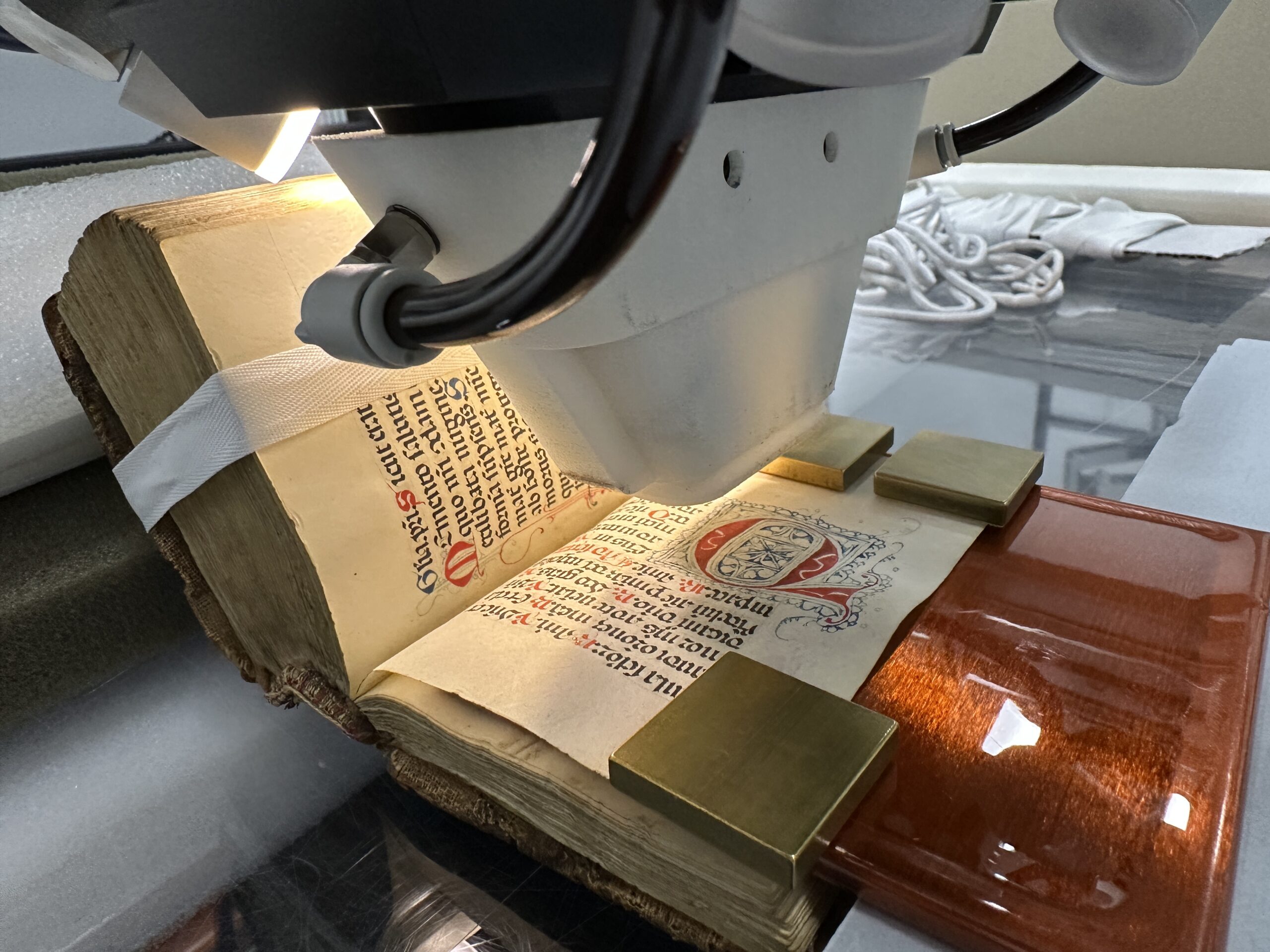
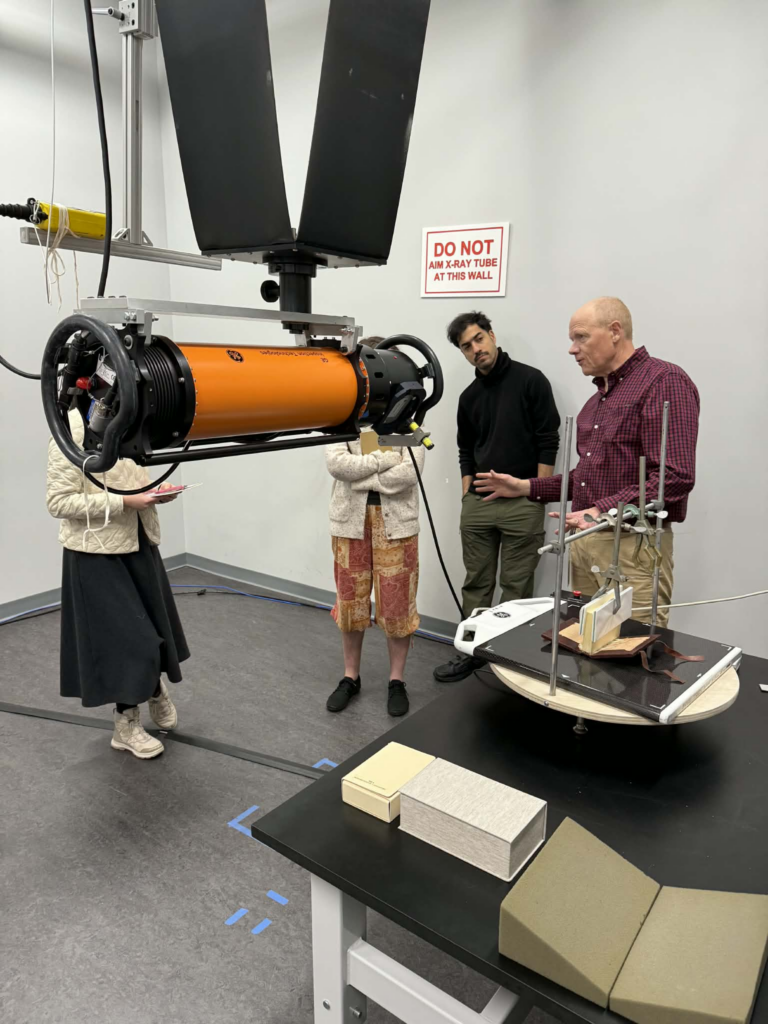
From there, we went to ICPH where Dr. Anikó Bezur and Dr. Richard Hark welcomed our group with snacks and cookies! Dr. Bezur gave us a very informative presentation about the different types of analytical equipment and the kind of information that they provide. From there we went on a tour to see the various analytical equipment that are available at IPCH including an X-ray tube setup that is designed to examine the spines, sewing, and bindings of books.
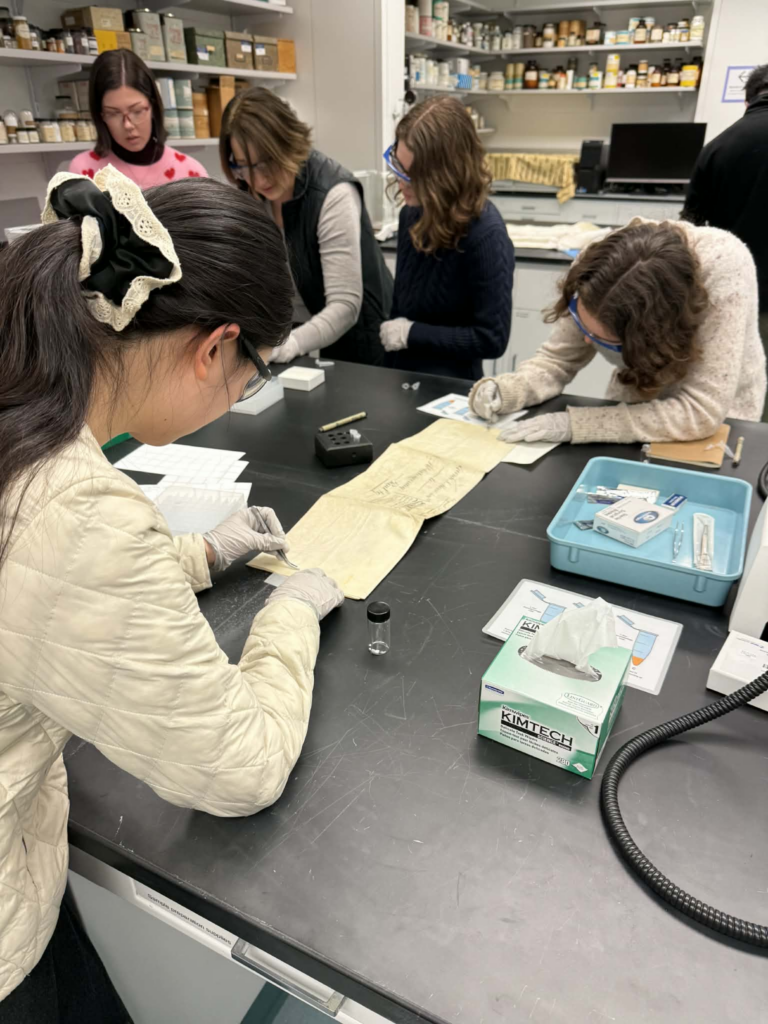
Finally, we concluded our day with two sampling exercises on educational parchment material. The first exercise was the extraction of a parchment sample with high enough mass for carbon dating. This activity helped the students understand the discrepancy of sample sizes between thin and thick parchment and appreciate the degree of invasiveness that is required for this analytical technique. The second exercised was to use eraser rubbings to extract proteins from the surface of parchment. This technique is commonly used to obtain samples for Peptide Mass Fingerprinting (PMF). These two exercises demonstrated the large discrepancies in sample sizes that are required for different micro-invasive and invasive techniques.