Books
Technologies
Material Histories
Technologies
Material Histories
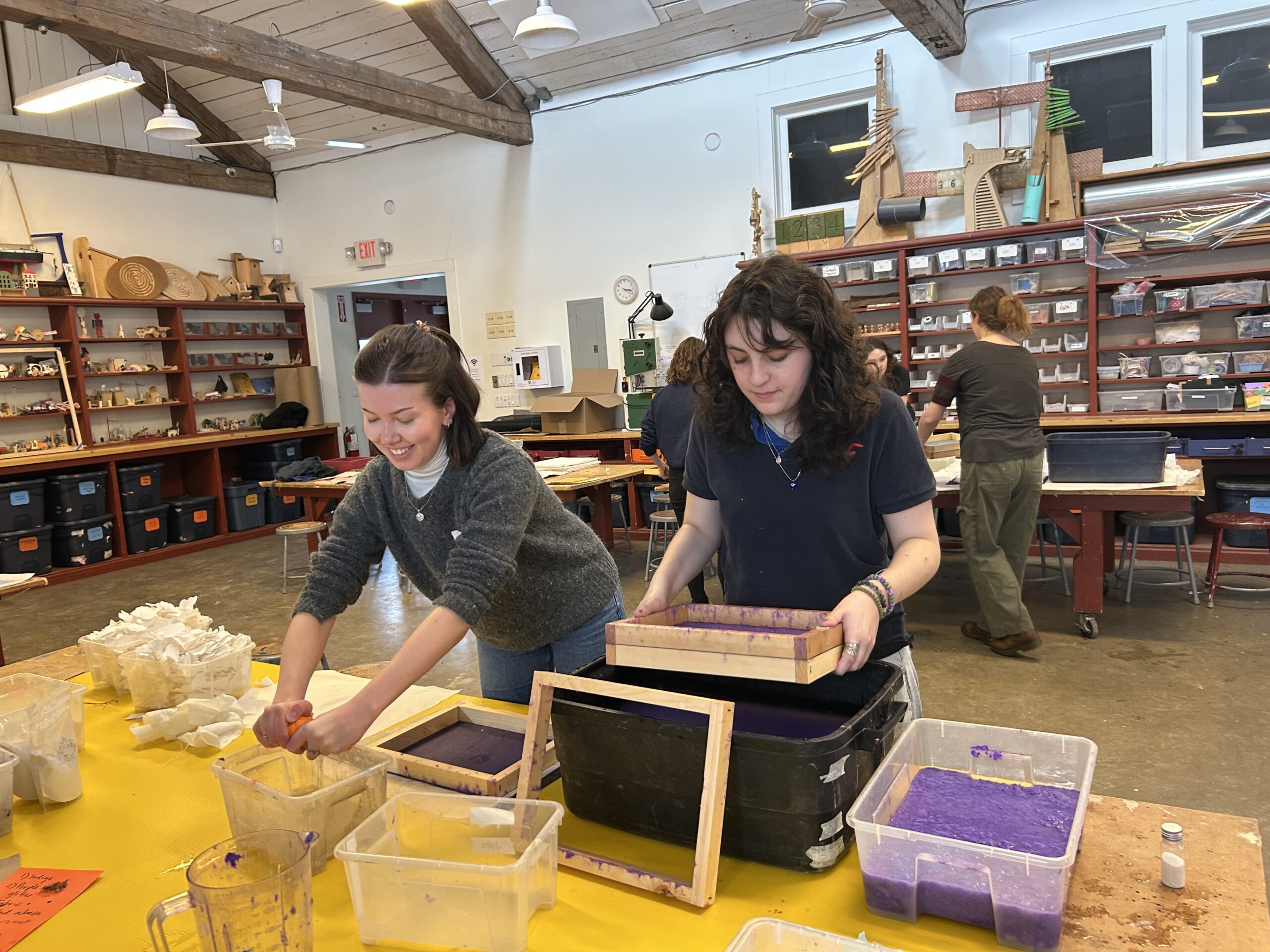
On one of the coldest days of this year, we traveled up the Eli Whitney Museum and Workshop (EWMW) to make paper with Kat Wiese, artist, printmaker, and experimental papermaker. I had met Kat, who is the current Artist-in-Residence at EWMW at an Open Studios event last October and had admired her prints and paper-sculptures which reflect on the entanglements of the land, labor, farming, fiber, and art. Her astonishing Yale School of Art MFA project–“between flight and export” (scroll down to see the image!) is a haunting evocation of how environments, bodies, and the very material possibilities of representation inform each other and it was moving to hear her describe these concepts to our students before we delved into papermaking. (Another wonderful detail about Kat? She’d be a rocking chair if she were a piece of furniture…she asked us all about what our furniture-personae might be; we learned a lot about each other in a matter of minutes!)
Framing our adventure into paper-making through the work of a contemporary artist who is fascinated by the history and impact of paper making was a striking way to frame our previous explorations in close-looking at paper and parchment which, thus far, had been mediated by technology, conservation-expertise, and empirical analysis rather than affect, metaphor, and associative imagination. To think of materials as generating emotion, tapping into long histories of embodiment and shaping, and evoking synesthetic responses is to move from seeing them as inert things to dynamic nodes of knowing and feeling. Another paper-making artist whose work I admire, and who studies and trains in traditional papermaking techniques, particularly of the Indo-Islamic world, is Radha Pandey–Marie-France Lemay spoke warmly of being in one of her workshops and shared with us her efforts at making paper through this technique.
But back to our own efforts. Kat demonstrated the basics of the process: pulping, dipping the mold and setting the sheet, couching, pressing, and drying.
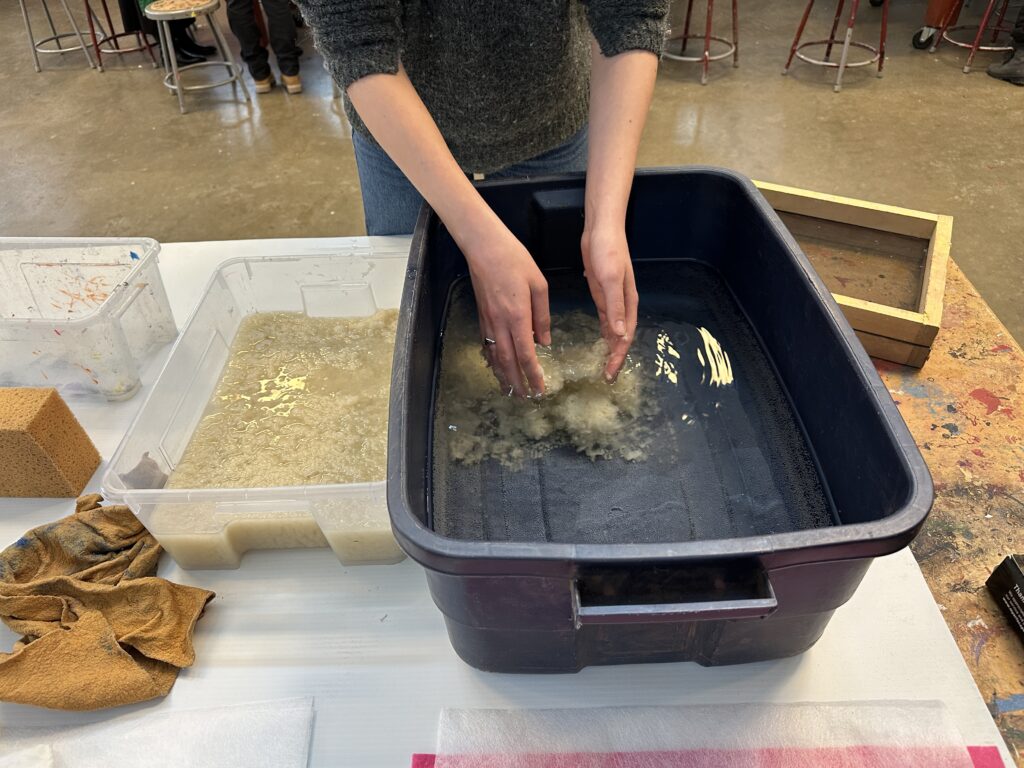
Putting the slurry in a vat of water to create an even solution/suspension.
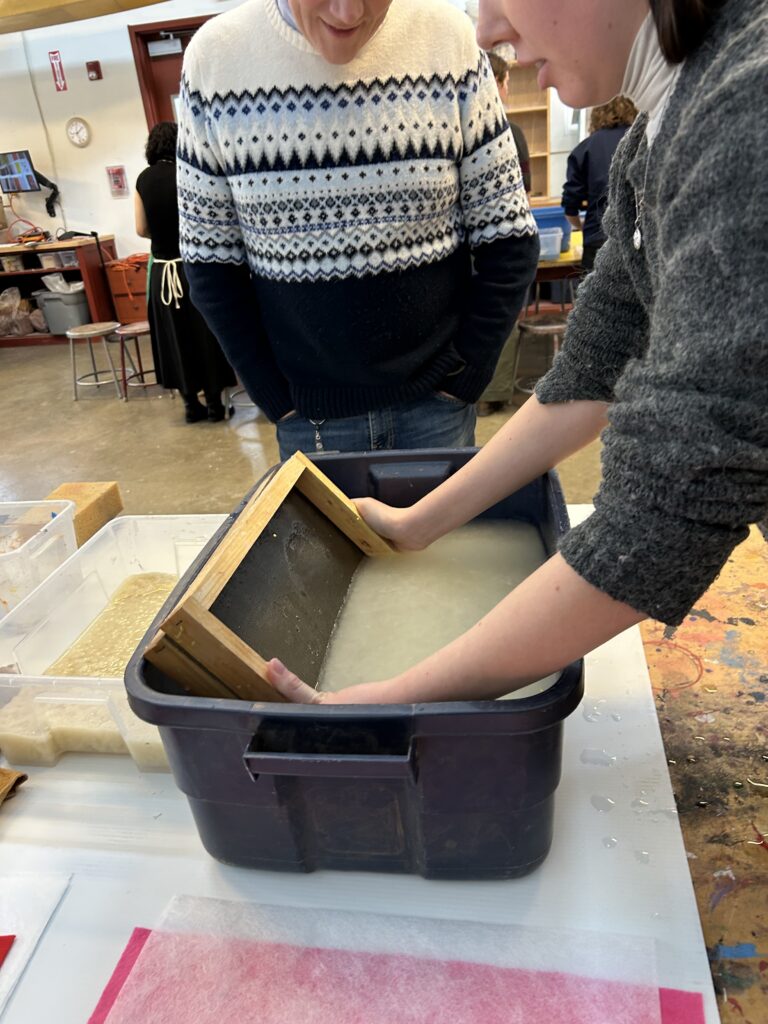
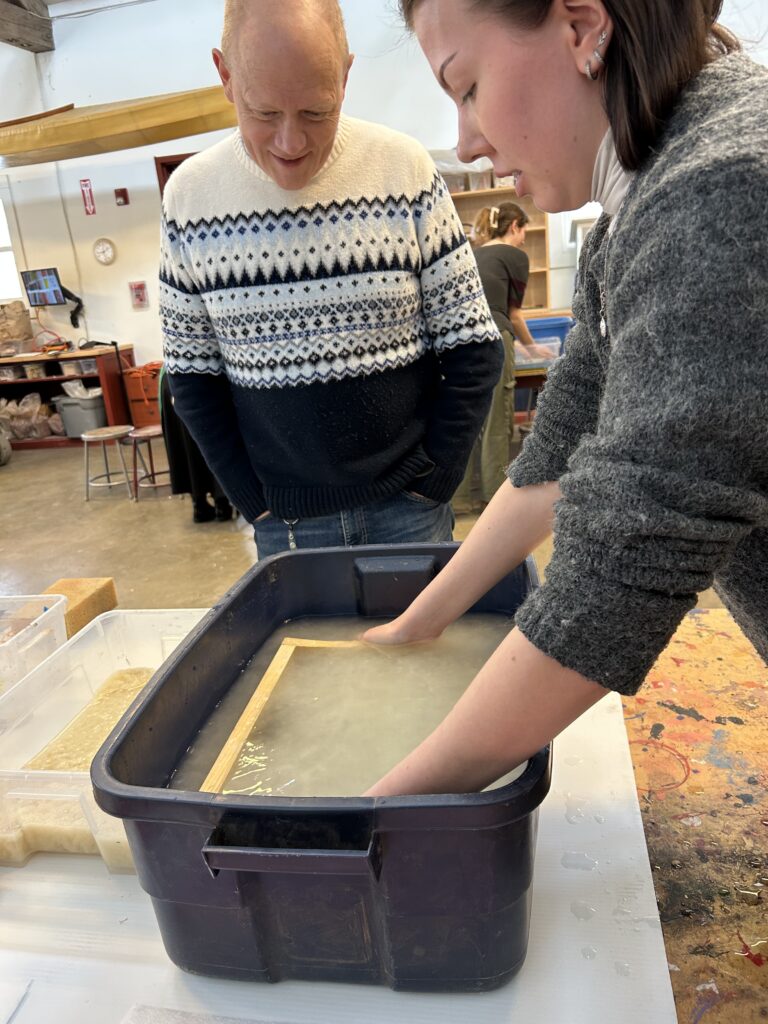
Dipping the screen with mold and deckle into the bath and forming the sheet.
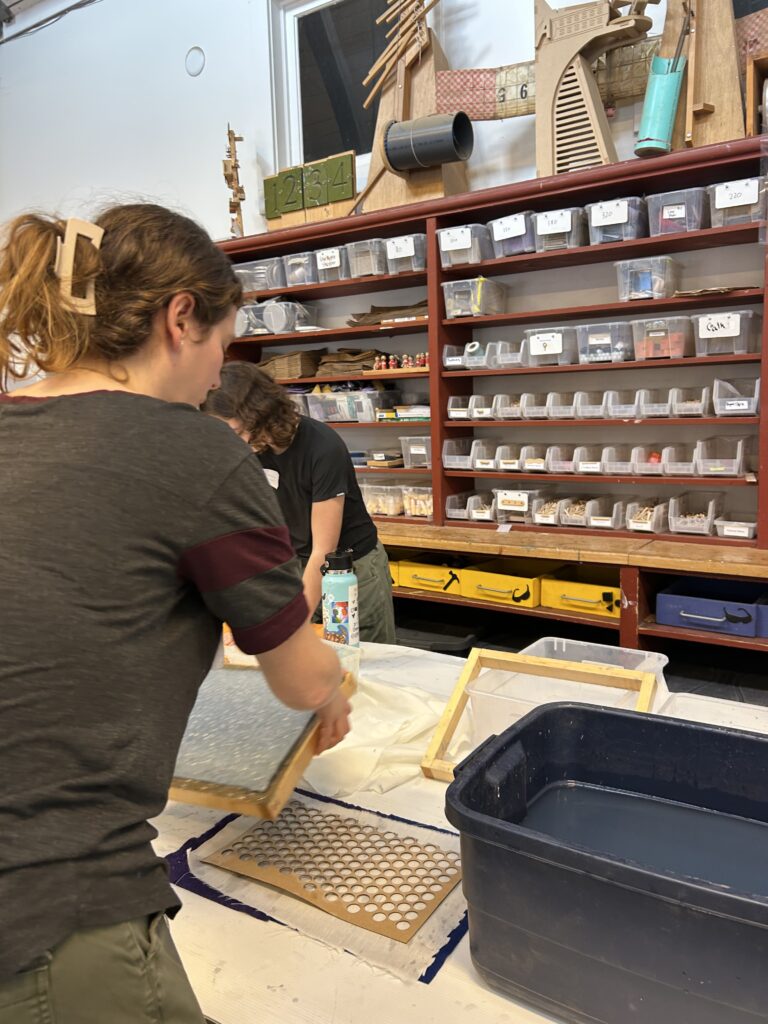
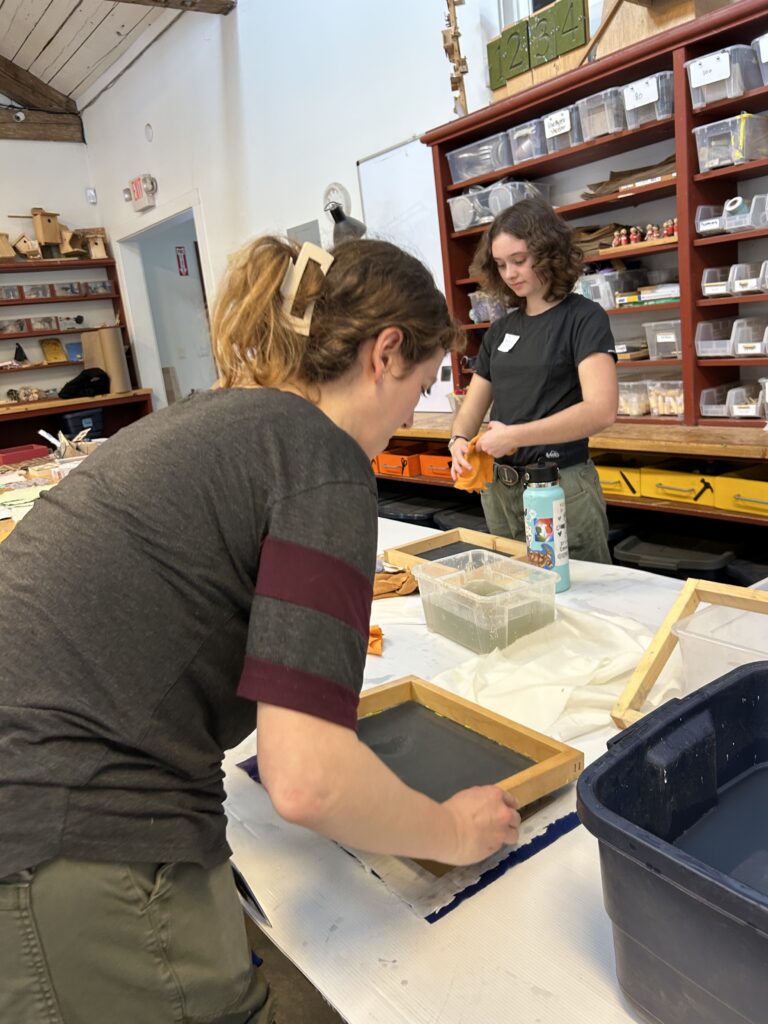
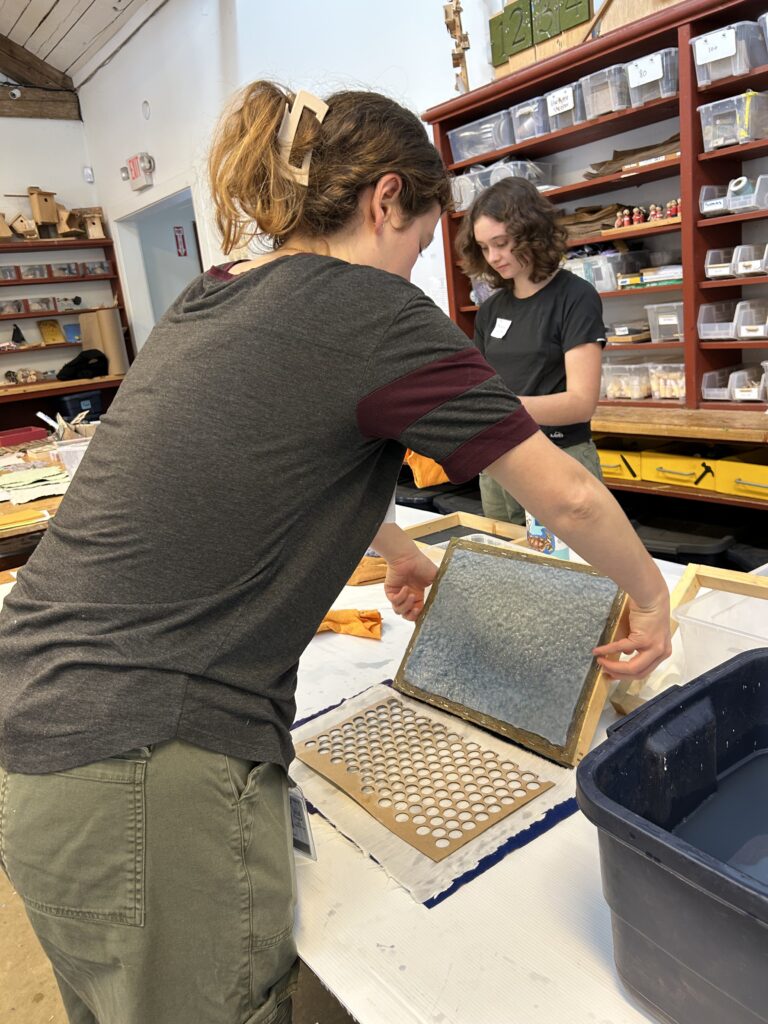
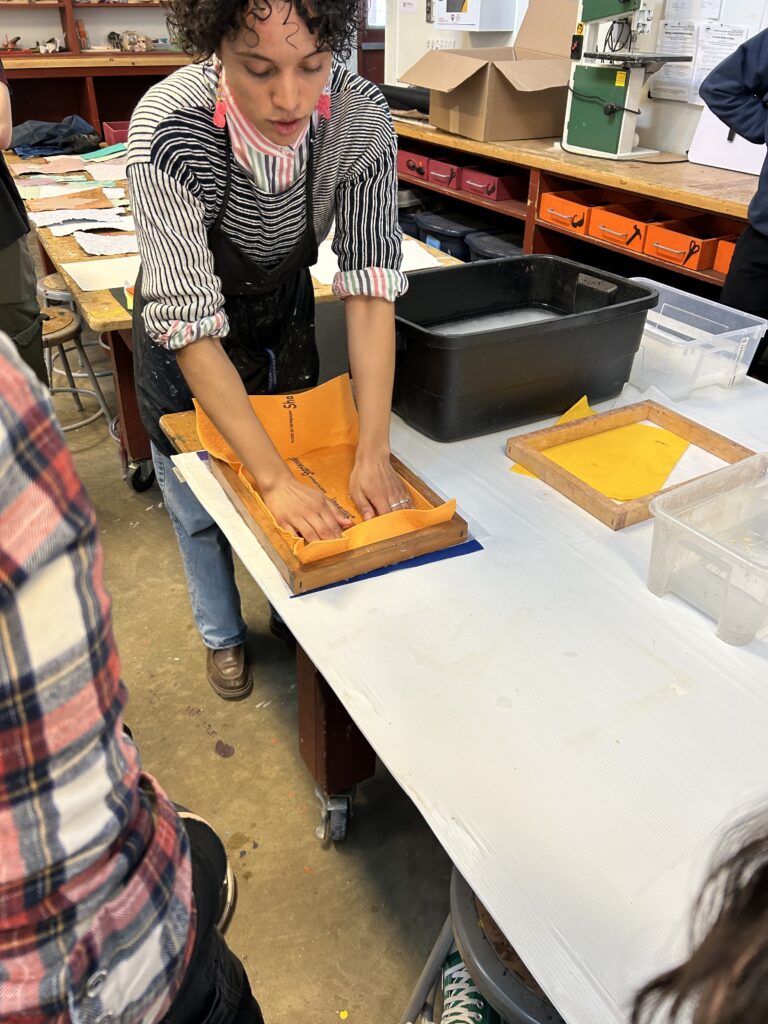
Couching – perhaps the hardest part!
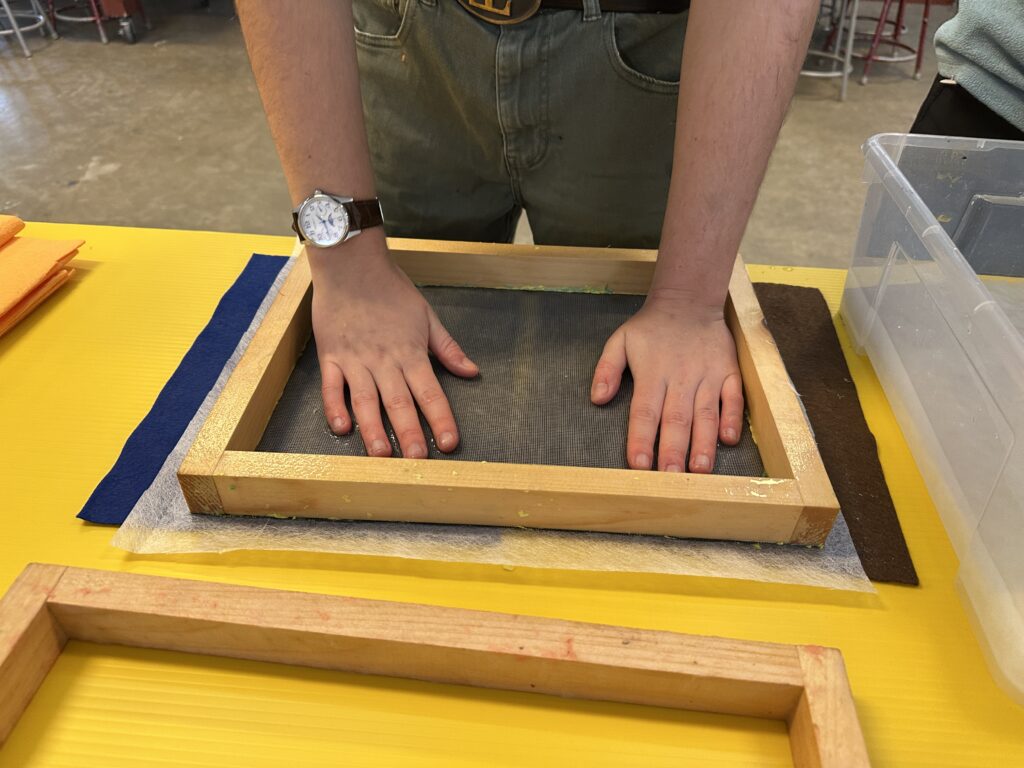
Drying the sheet…
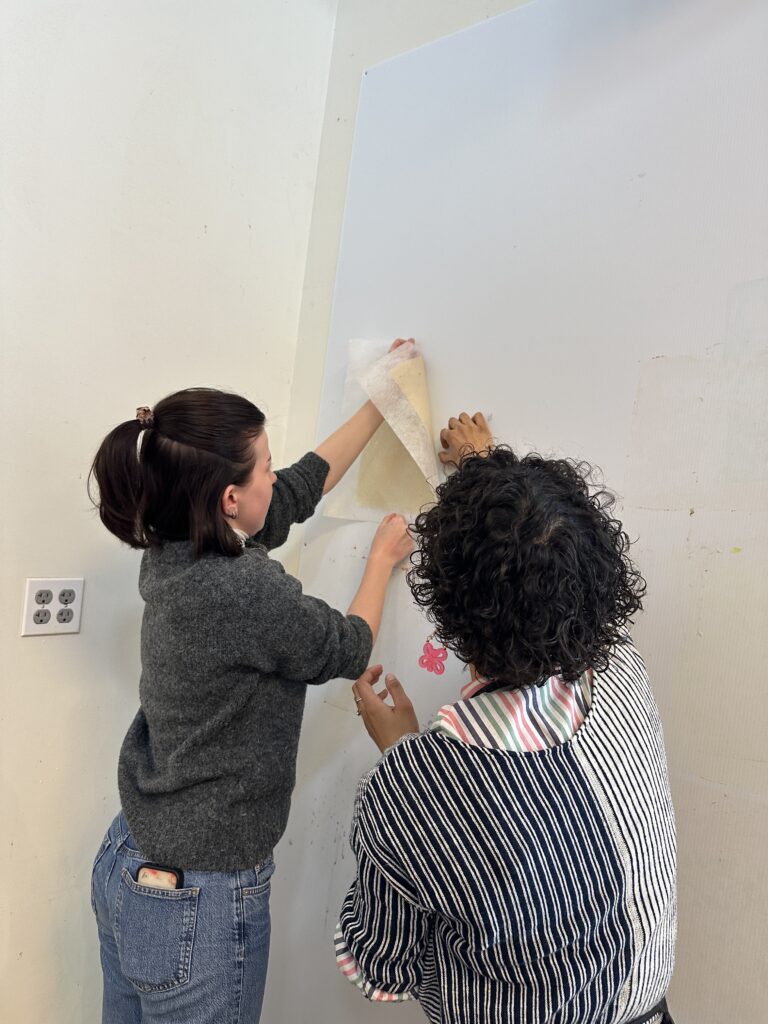
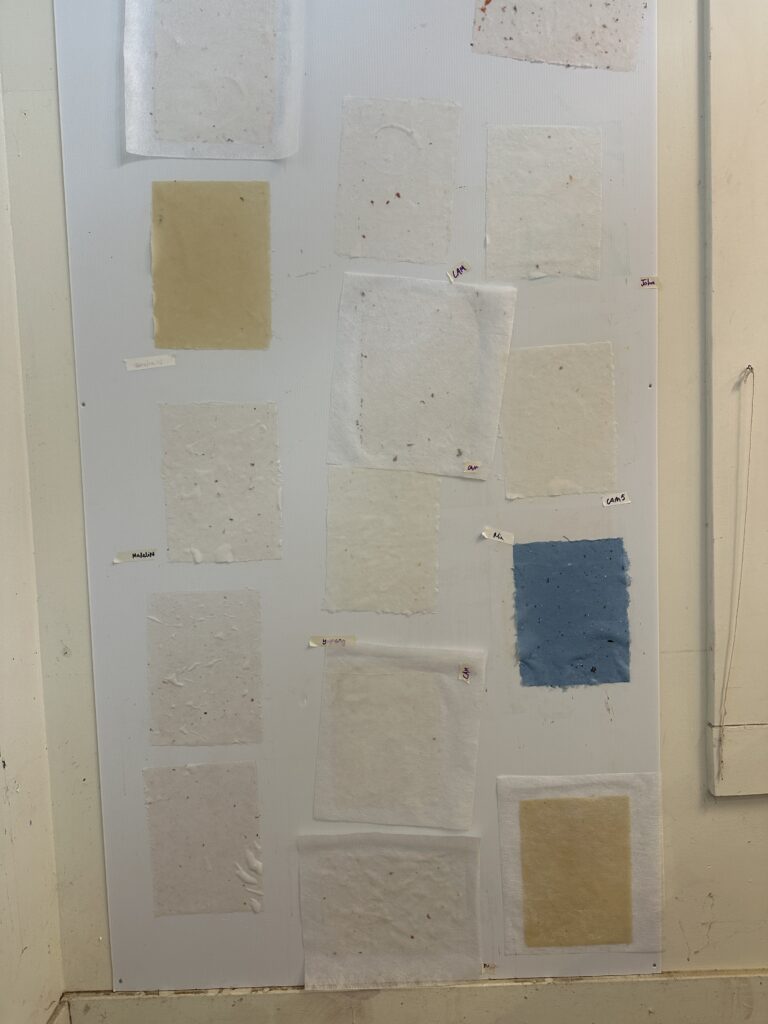
Slapping it on the foam-core board on the wall to dry!
After a basic run through, we turned to play and experimentation — some people had brought fragments of fiber and plants to add, others played with color, Jose and Richard are experimenting with copper particles in paper, which they hope will turn green when exposed to vinegar vapors (I’ll update this when we know more!).
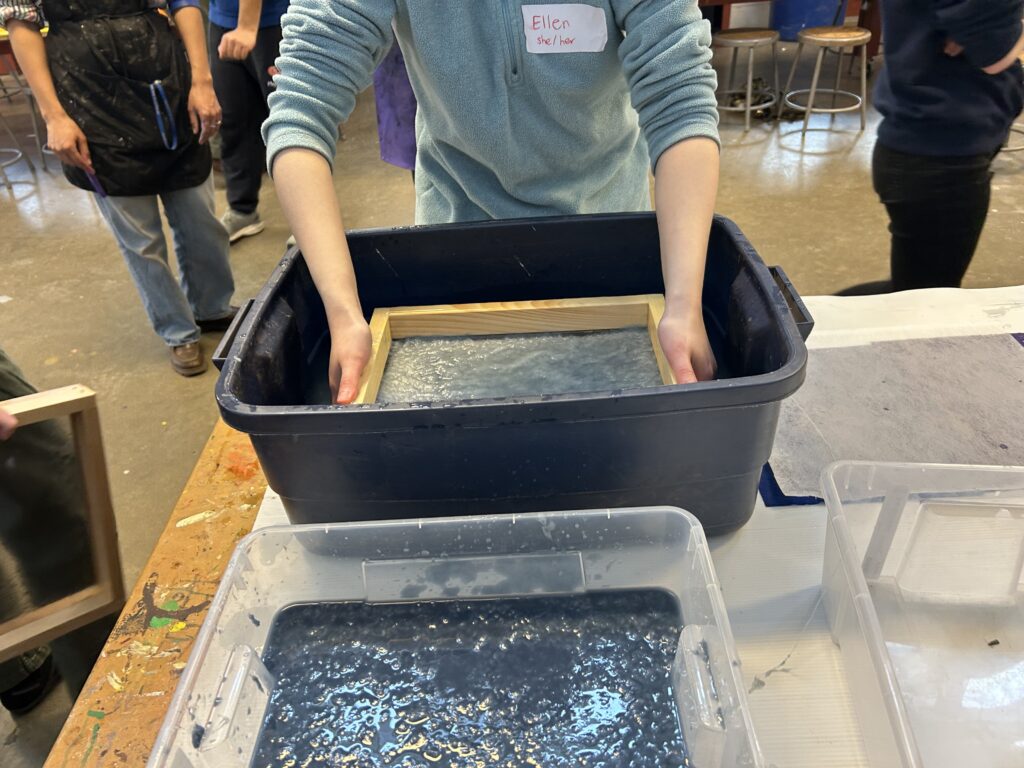
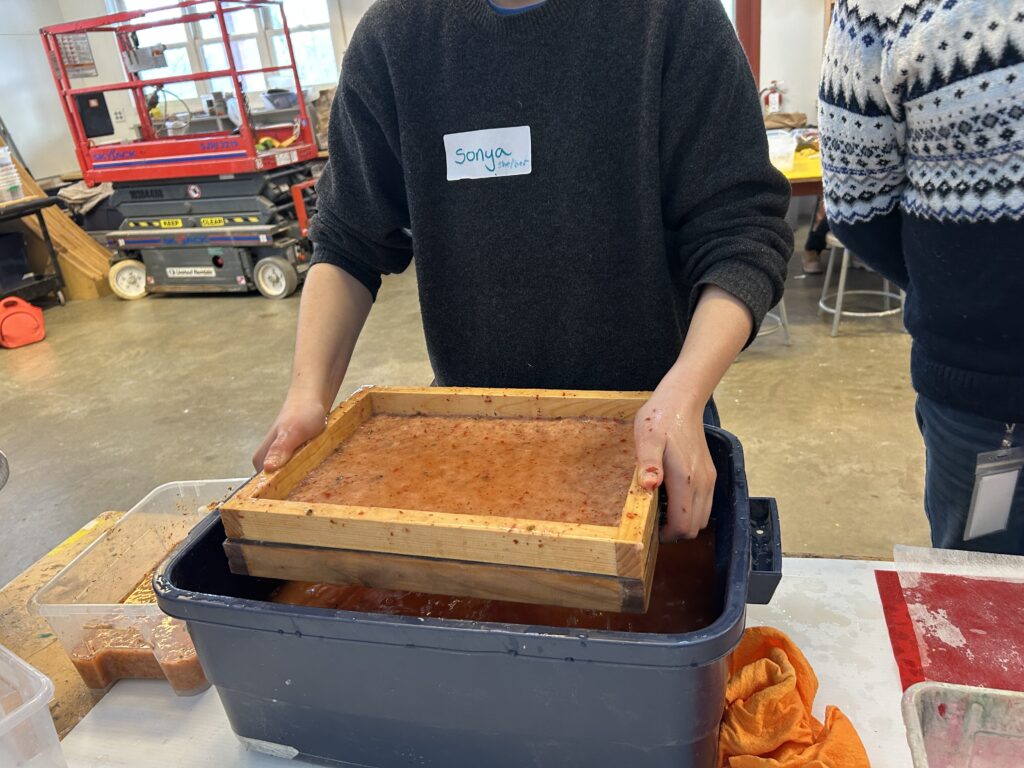
Strategizing about what to add:
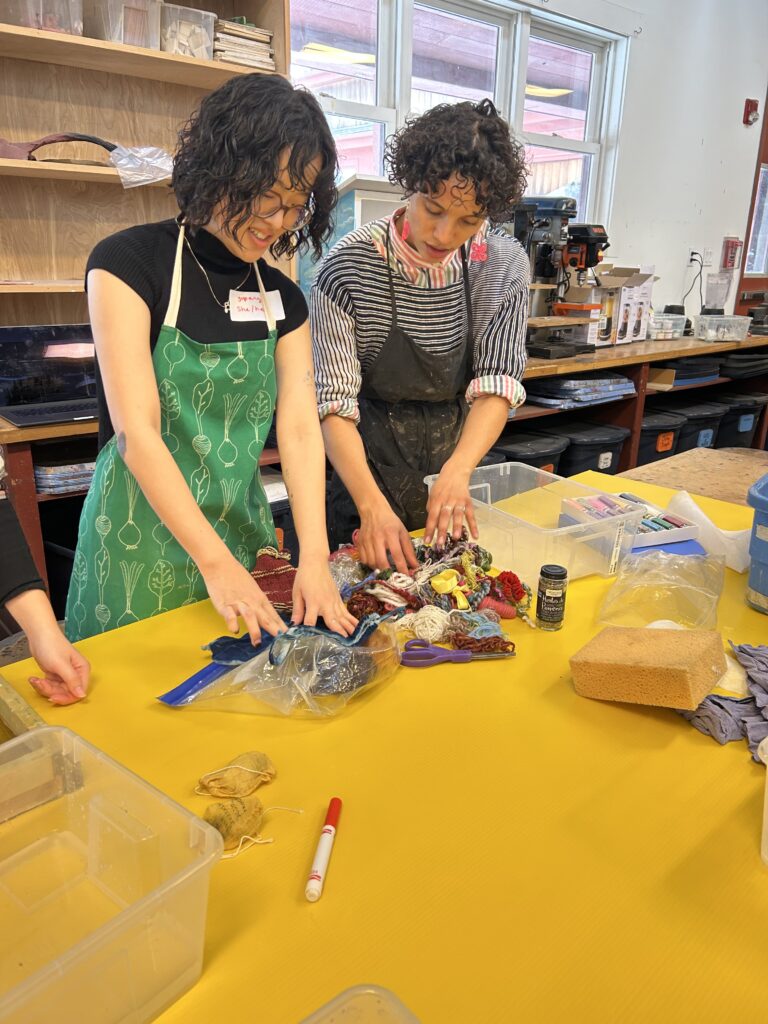
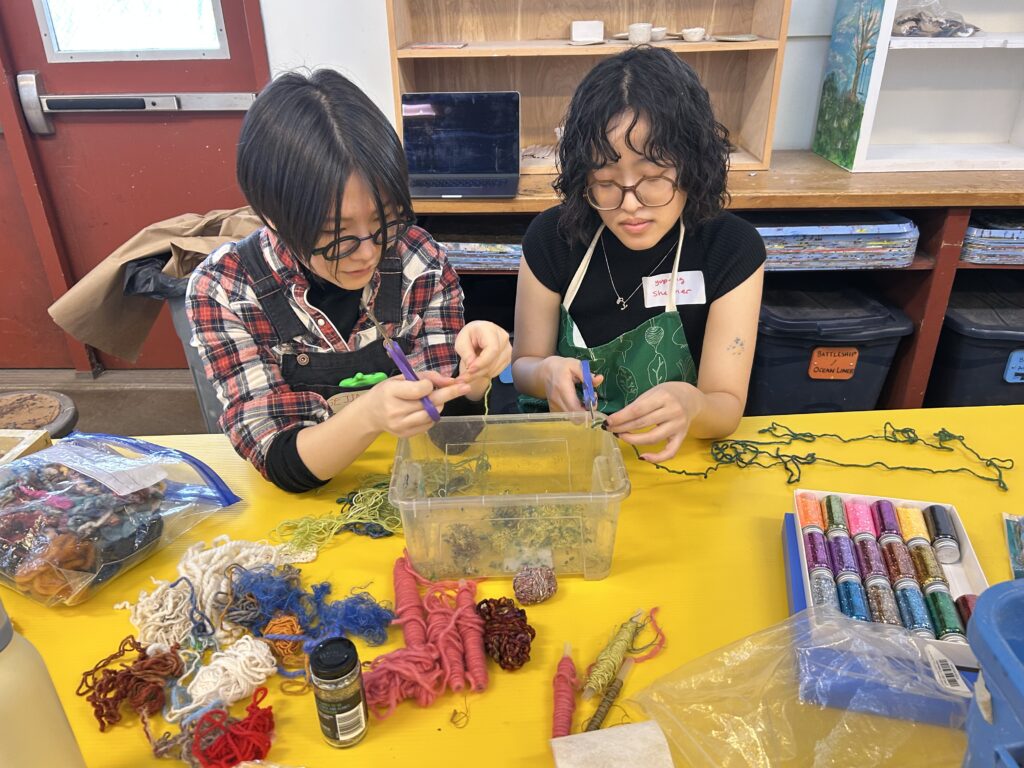
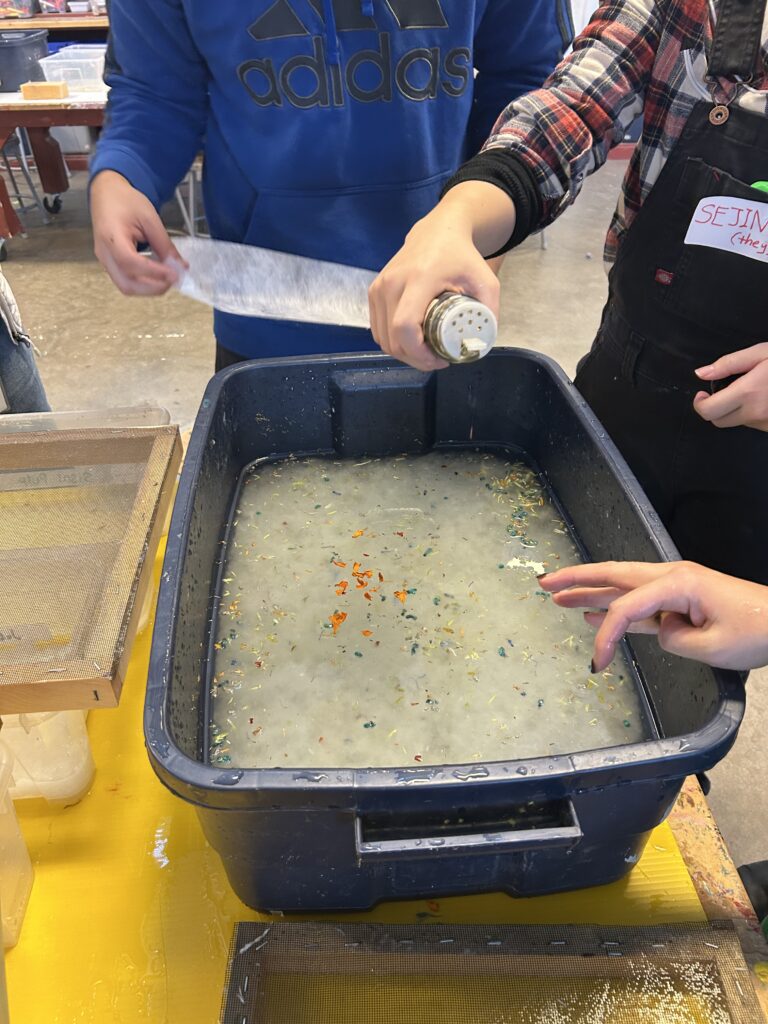
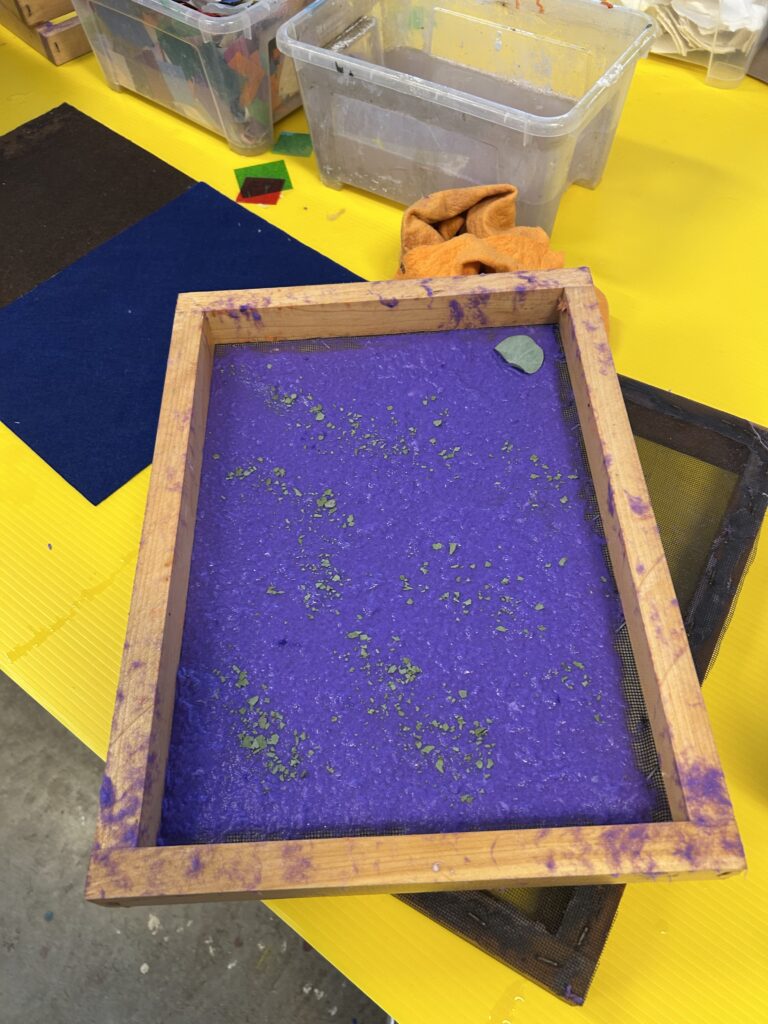
A Self-Portrait in Paper: Yupeng adds fragments of previous textile projects to her sheet:
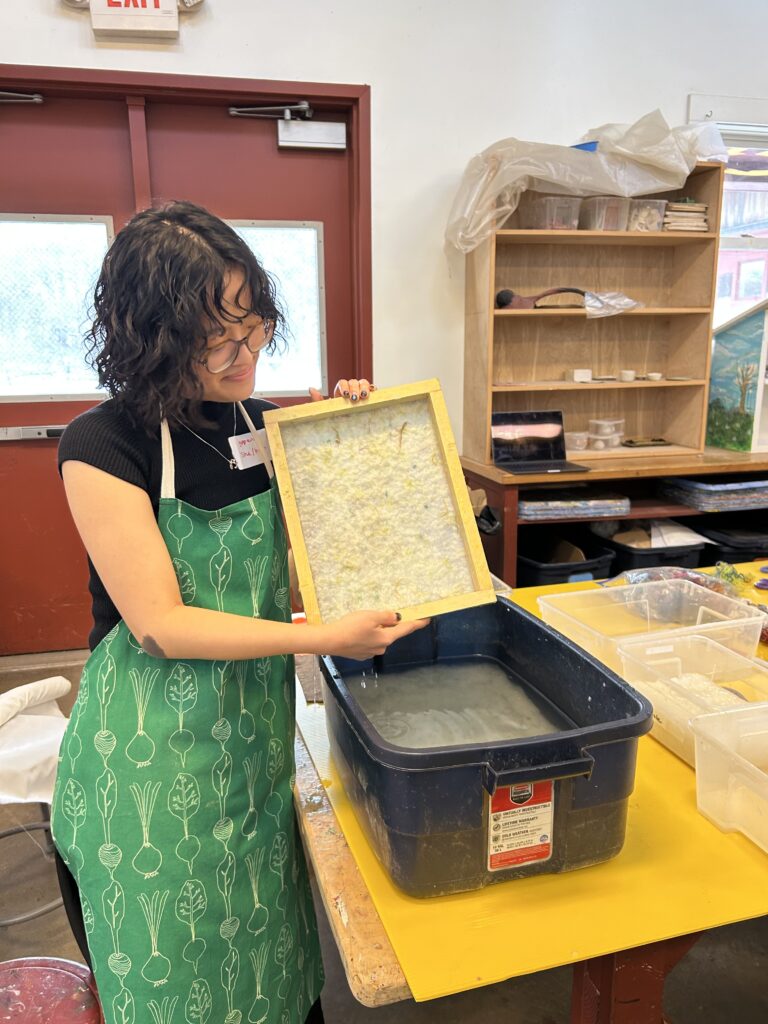
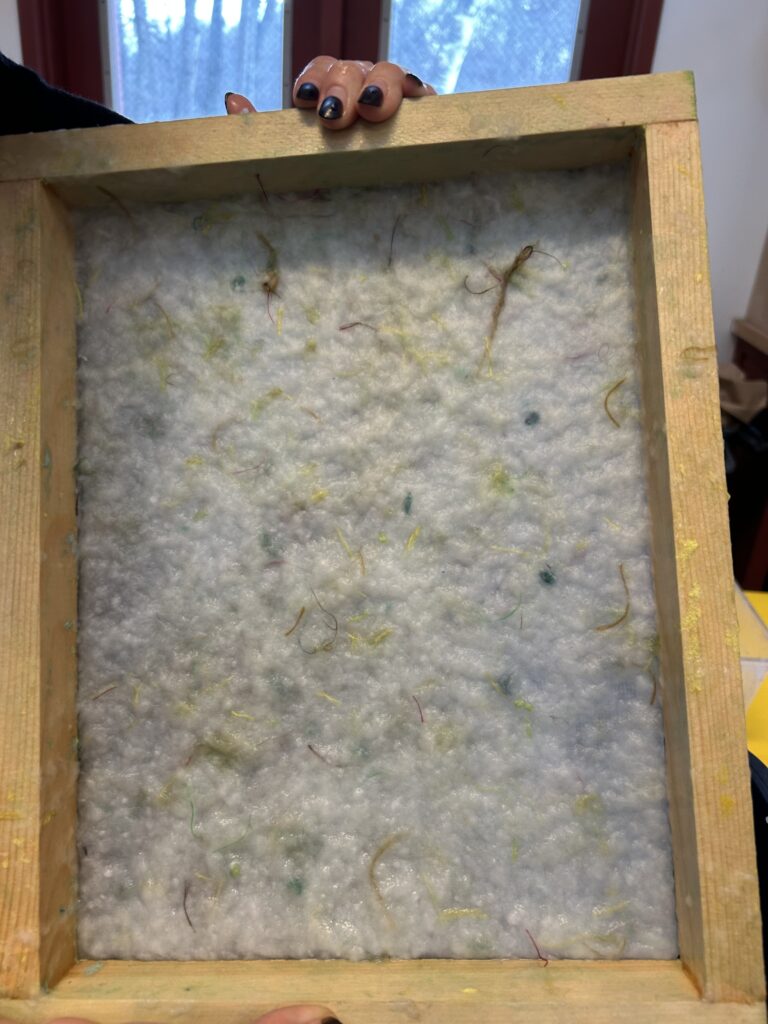
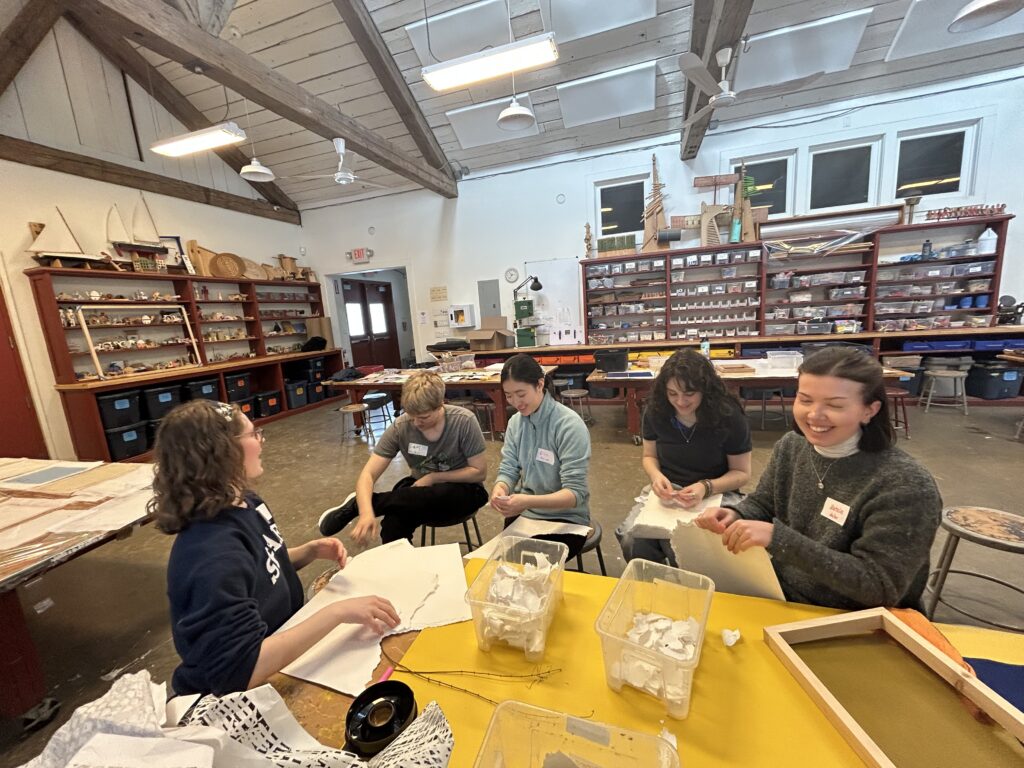
But clearly we needed more pulp for more play — and so we fashioned a circle of rag-rippers and separators. Our pulp came from cotton, abaca, sisal, and esparto linters from Carriage House which come in sheet form. They have to be ripped, soaked, and blended up before they can be used as pulp.
And finally, after we cleaned up and (most) people went home, the papermaking after-party began…
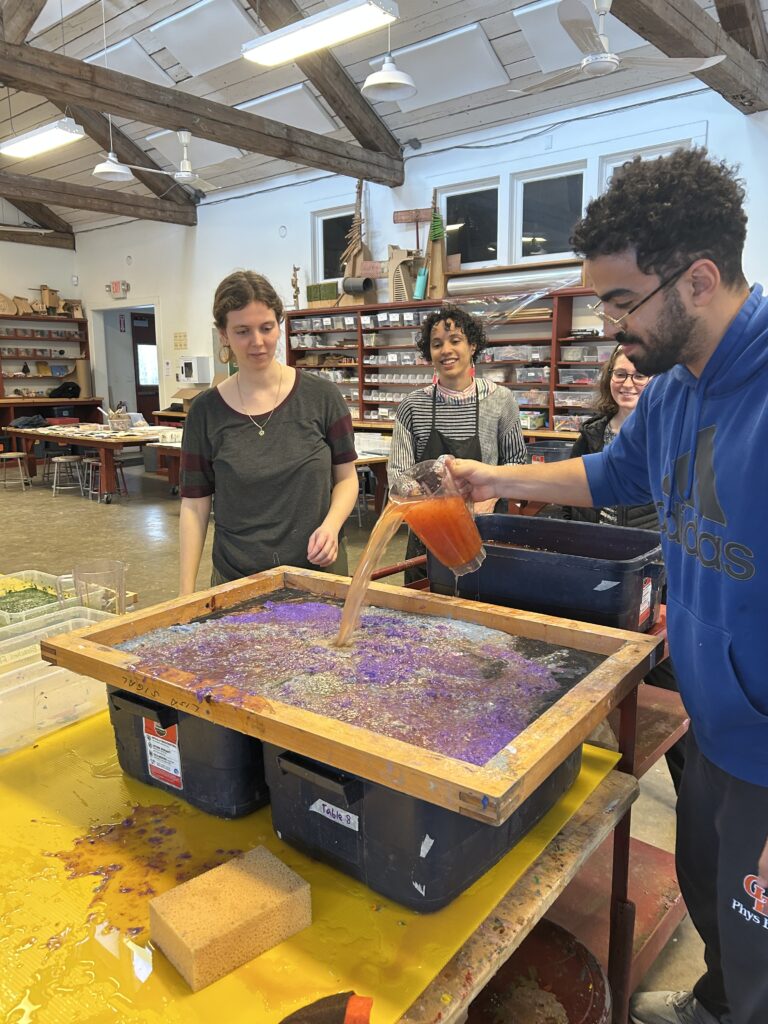
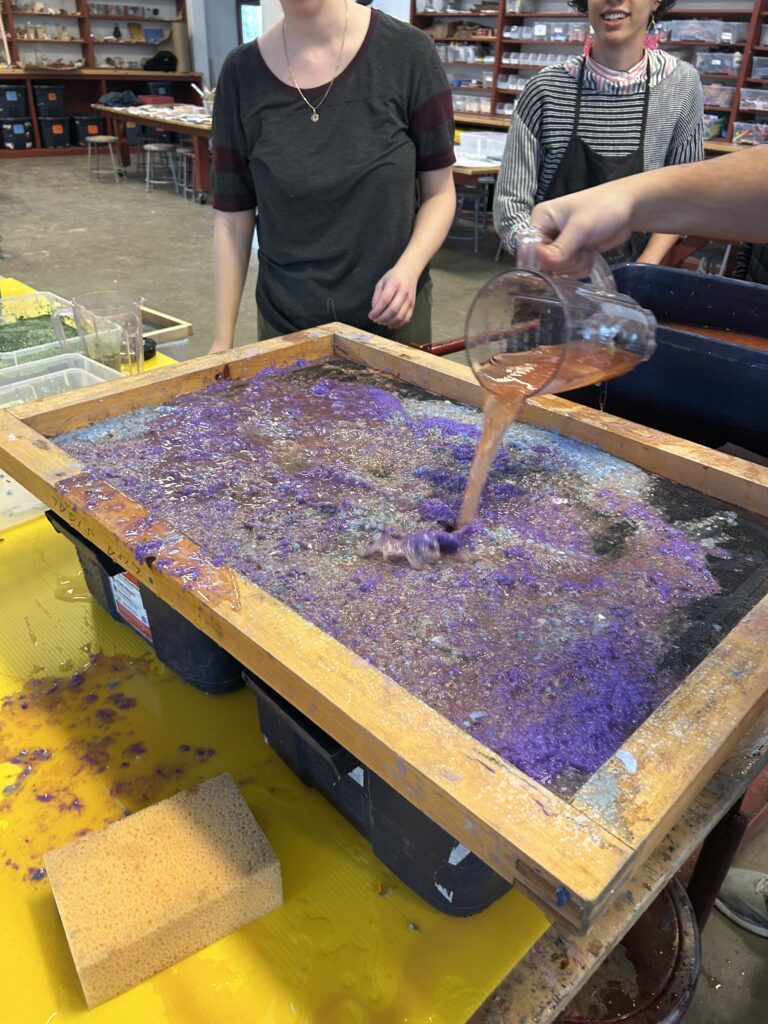
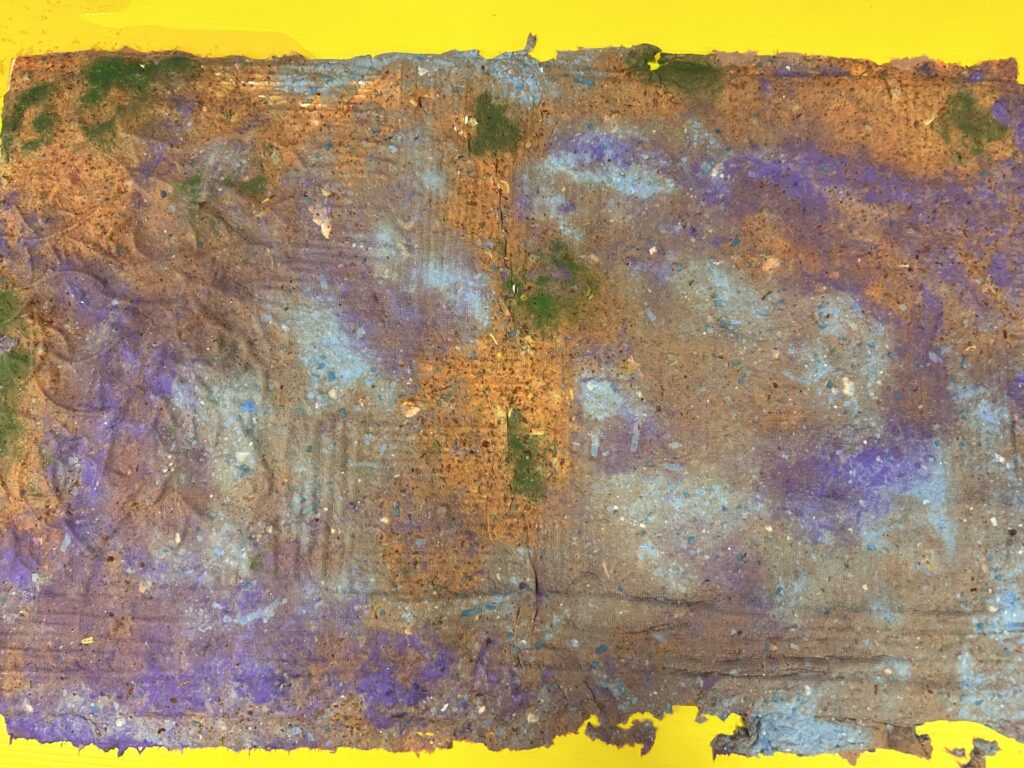
A combination of all the pulp, all the experiments, all the additions — a composite, textural vision of our experience together.