Books
Technologies
Material Histories
Technologies
Material Histories
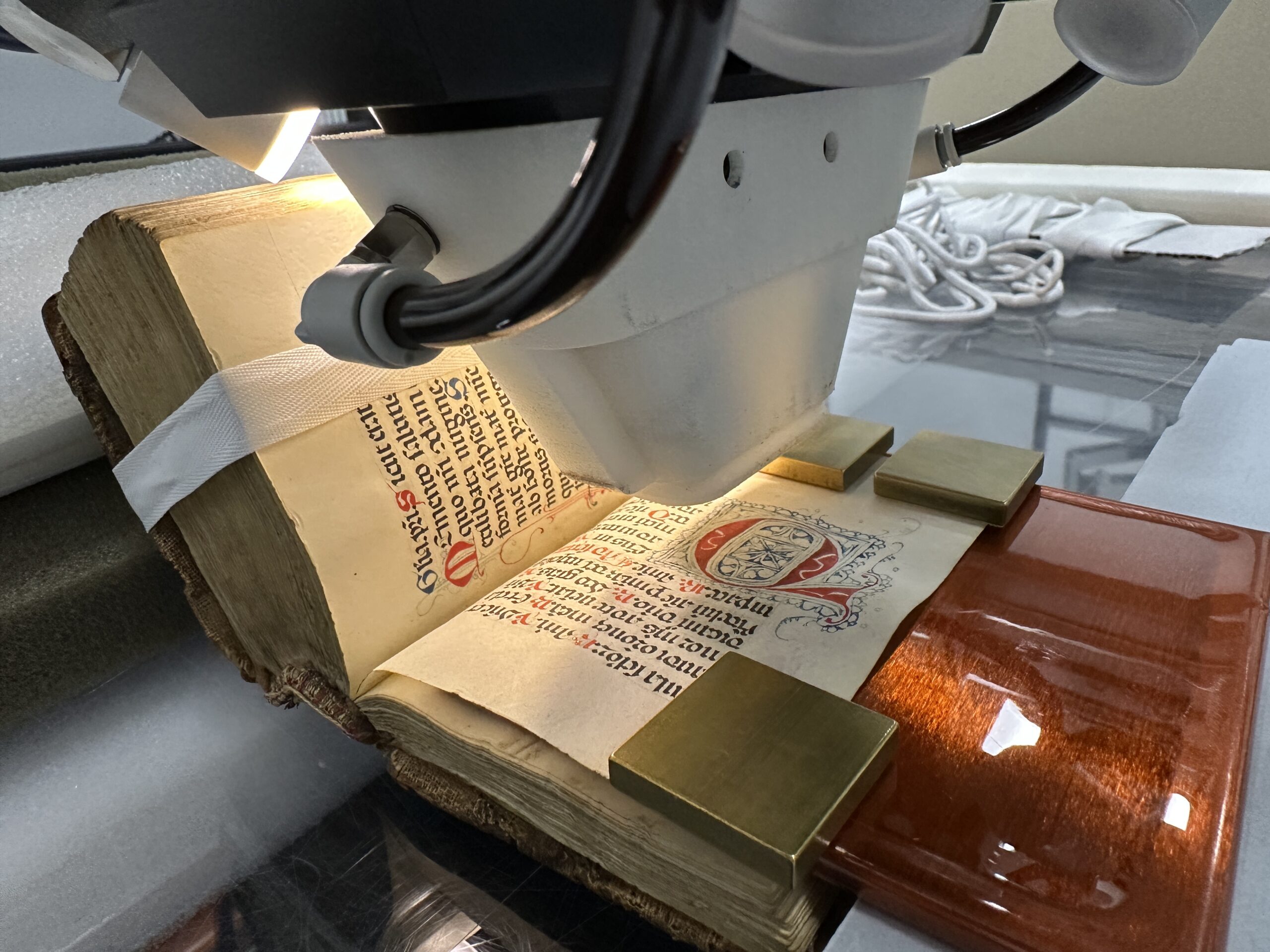
Yesterday was a study in intellectual expansion and physical constraint. Watching our students wrap their minds around different kinds of spectroscopic analytical techniques — XRF, Raman, FEIR (fluorescence-encoded infra-red spectroscopy), as well as high-magnification microscopy–and then apply their new-found basic understanding to asking questions about manuscripts was moving and surprising. Here is my list of topics/questions they identified in their objects that could be studied at the physical, chemical, molecular, and elemental levels. I’m re-learning my basic chemistry alongside them, beginning to keep a list of familiar medieval/early modern products and their chemical names.
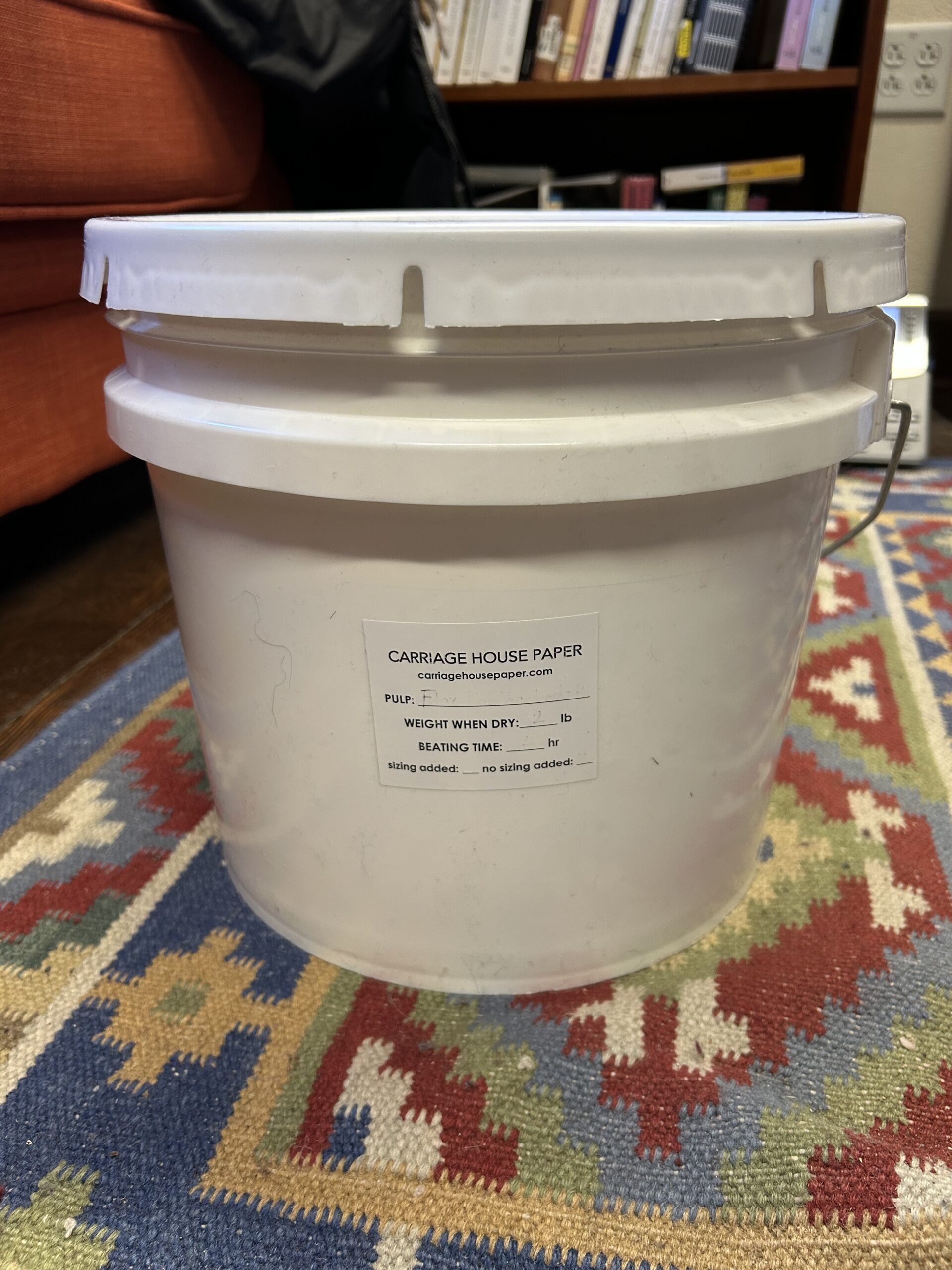
But alongside this explosion of the intellectual, came the very real, and truly hilarious, thump of the material. Aniko gave me a 45lb bucket of fermented linen and flax for papermaking which she described as smelling like “dog-vomit.” This, too, is part of the material experience. The stench of paper manufacture, which carries on into the modern era, was a characteristic feature of early modern mills, where the work of separating rags and fermentation was done by women and children. The Historical Smells of Europe project, Odeuropa, records that as late as 1856, Richard Herring writes of the “most offensive smell” of sized paper.
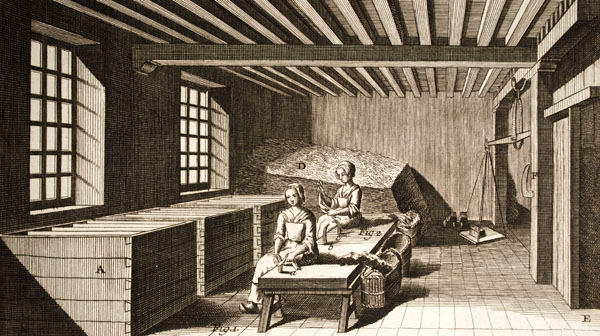
(This image, taken from Diderot’s Encyclopédie, shows idealized images of the process of paper-making, but no images from earlier periods survive. Encyclopédie, ou Dictionnaire raisonné des sciences, des arts et des métiers, vol. 5 (plates), eds. Jean-Baptiste le Rond d’Alembert and Denis Diderot (Paris: Briasson et al., 1751–65).)
Our version of the fermented rags came from Carriage House, and Anikó had stored it carefully in one of the lockers near our classroom and then revealed it to me as we were leaving. We’ll hopefully explore using it in our paper-making workshop next week, but in the moment, I had a heavy bucket to lug around–and I was not going to my office, which in any case, was about a 10 minute walk away. Tucking in my abs, remembering good form for a farmer carry, I picked up my handbag, lunch bag, and The Bucket, and trotted off to my first meeting. Two minutes in, my arm began to ache. I showed up flustered and late to my meeting to be met with bewildered grins: “What IS that?!” Thankfully, my kind colleagues agreed to store The Bucket in a tucked-away meeting room while I rushed off to lunch and more meetings.
I still had to bring The Bucket back to my office though, on a freezing day when it was barely 10F outside. I bundled up bravely between meetings and set off for the mission of retrieval. But of course, the rooms were closed and locked. The Bucket and I were now separated by glass. A few security negotiations later, I grasped the handle firmly and set off once more. This time, I met several colleagues I had not seen in weeks, all of whom eyed The Bucket with suspicion and demanded to know why I was hauling what looked like a vat of primer around campus. The best part? All those eyes lit up when I described the paper-making workshop…”can I come?”