Books
Technologies
Material Histories
Technologies
Material Histories
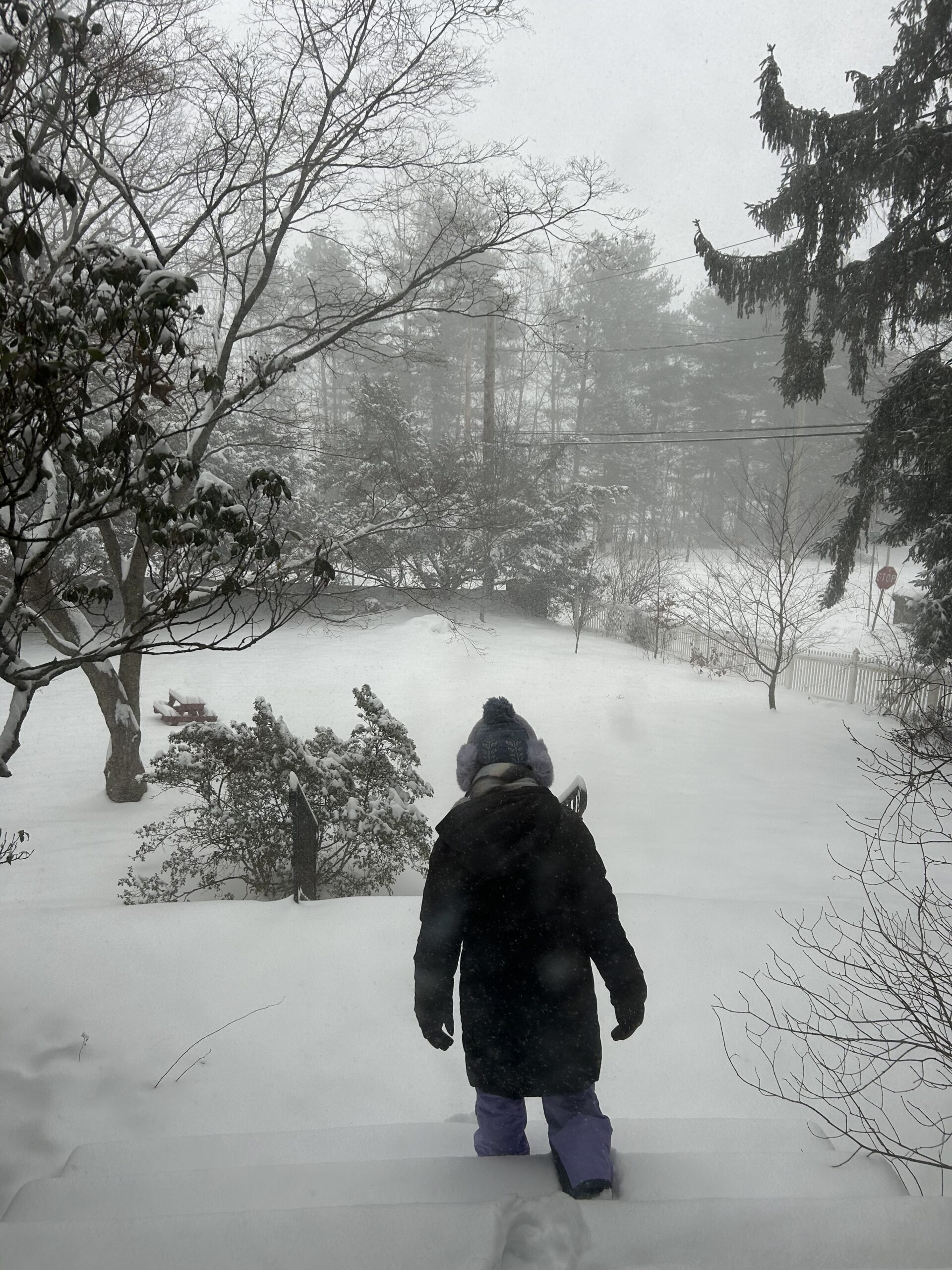
The weather outside is frightful (that’s my daughter experimenting with snow in the storm!)…and I’ve spent all afternoon searching, comparing, and ordering materials for this course. Doing hands-on work requires space and materials, and even at a well-resourced institution like Yale, this is not easy to come by for a humanities course. I dream of having my lab–a shared lab, a collaborative print shop–really, any big, friendly space where we can get messy and try things. But that’s not our reality right now. Instead, we’ve spent a lot of time as a team strategizing about where to hold classes, how to move students to them, and what materials we will need to support the experience. Here are some thoughts on space, materials, and money (I’ll update as we go along).
Before I dive in, however, I want to acknowledge my inspiration from Kate Ozment, the brilliant and generous scholar and teacher, who has carefully documented her work at Sammelband. I was first intrigued by the ‘maker movement’ during the pandemic when my social media feeds were filled with colleagues trying to figure out how to mail their students packets of supplies to make books, quills, inks. It’s taken some years to catch up to them, since my institution is certainly not a pioneer in this regard (!), but this a warm shout-out to all the Rare Book School’s SoFCB fellows who have been doing ground-breaking work in much less well-supported institutional conditions. Special kudos to Ryan Cordell and Skeuomorph Press, who organized the first Building a Booklab symposium in May 2025 at UIUC which allows many of us to share strategies for dealing with issues around funding, materials, and space constraints.
SPACES:
So far, this class is spread across the following locations:
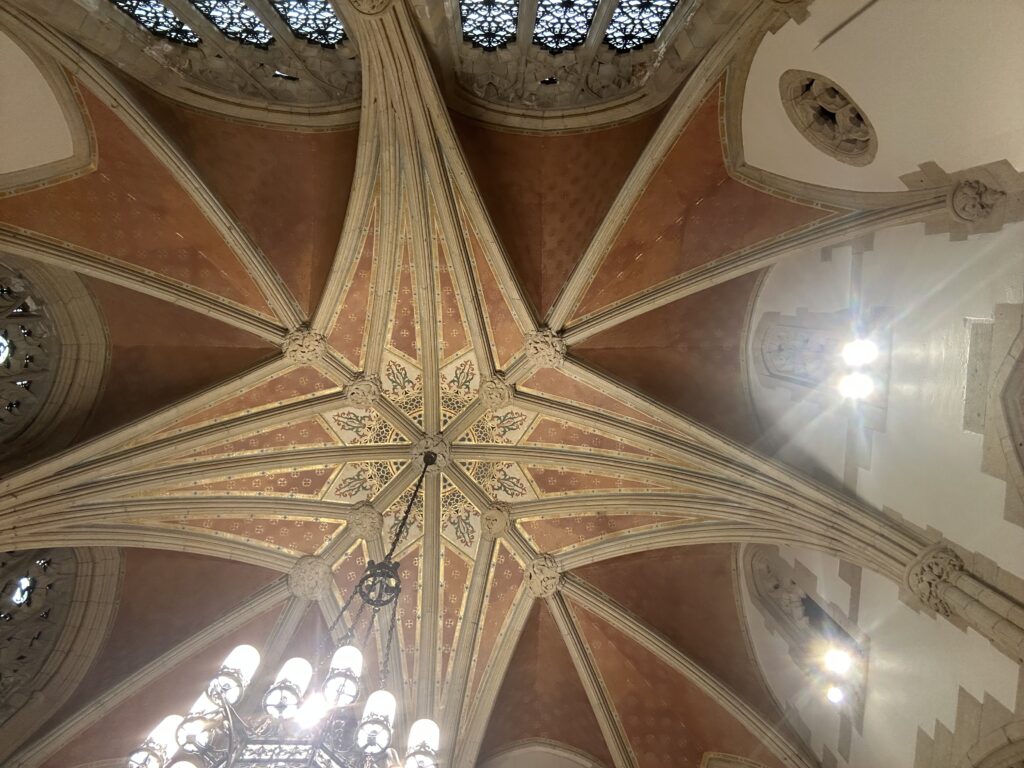
The wonderful Gates classroom in Sterling Library, which is–fittingly!–a small Gothic chapel-like space, initially built to hold Yale’s copy of the Gutenberg Bible. We meet here for our Wednesday seminars and some of our Friday labs when we have to consult collections materials.
We also have some meetings in the flexible classroom at the Poorvu Center for Teaching and Learning, where we can safely do things like take apart books–because of course, xacto knives are dangerous objects around five-hundred-year-old books!
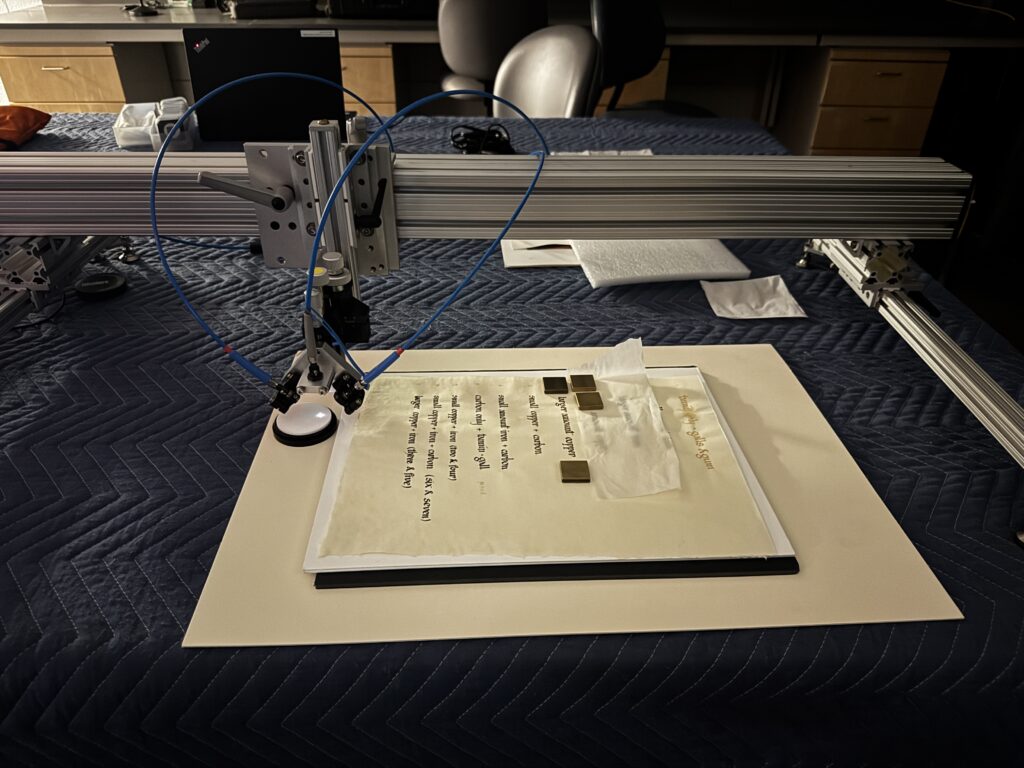
Then, there are the labs at the Institute for the Preservation for Cultural Heritage on West Campus, where Anikó and Richard have their Heritage Science Lab. We will be there for 3-4 lab sessions, learning to use equipment and make inks. But we still have to work out how to get the students out there efficiently and back since the shuttle take a very long time.
But all this still doesn’t solve the problem of where to make paper in the depths of winter…since being outside isn’t really an option (or a pretty miserable one!). For this, we are partnering with the Eli Whitney Museum and Workshop, a local treasure and leader in promoting the importance of embodied knowledge and hands-on learning, with the help of their current Artist in Residence, Kat Wiese. While I am delighted to support and be in partnership with this storied New Haven institution, this comes at a cost–for space, for materials, and for Kat’s expertise–which means making a case for additional funding from the university.
MATERIALS
These are some preliminary materials lists:
Destroy a book activity:
Making a simple book with pamphlet stitch:
Thanks to Karen Jutzi for making individualized packets for each student.
Basic kit for working with paper, parchment, books:
Basic binding kit
Mark-making implements:
Paper sampler:
small samples for each student to use and experiment with.
Most of these items were acquired on Etsy (ScribalWorkshop), Amazon (we have a business account for “office” supplies), Talas, Blick; we no longer have a large art supply store nearby since Artist & Craftsman’s Supply closed. With better planning, I’d probably order from Colophon Book Arts.
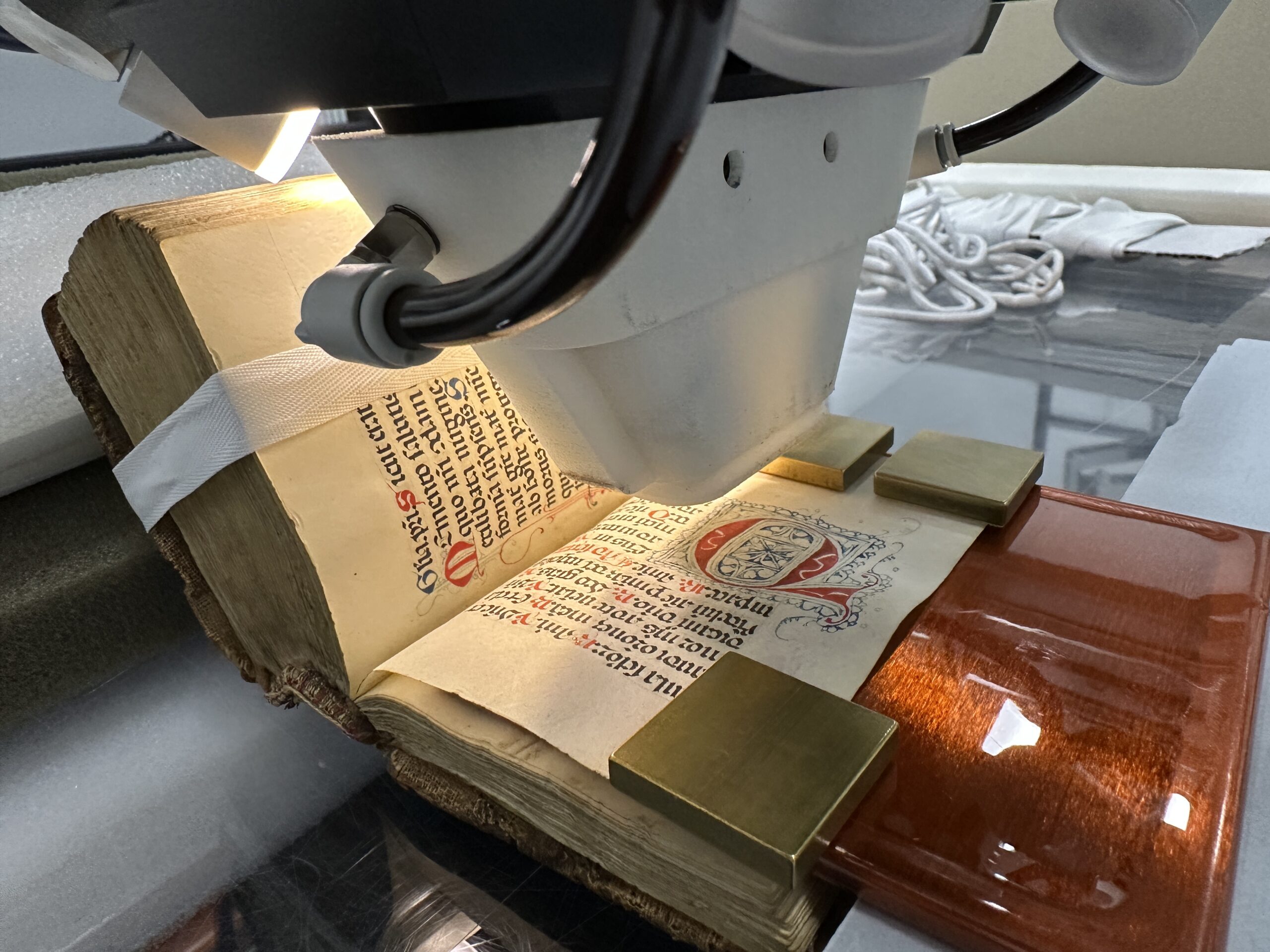
Instruments for analysis:
BUDGET:
Clearly all of these items either require a supportive humanities lab space where students can work, or they require the creation of a mobile “materials library” for students/classroom use. I was lucky enough to get a Poorvu Rosenkranz award to do a pilot of what this might look like in practice, but since that grant is also paying for a visit to Pergamena Parchment and for the papermaking workshop, I have been careful to think about how to acquire materials on a shoestring.