Books
Technologies
Material Histories
Technologies
Material Histories
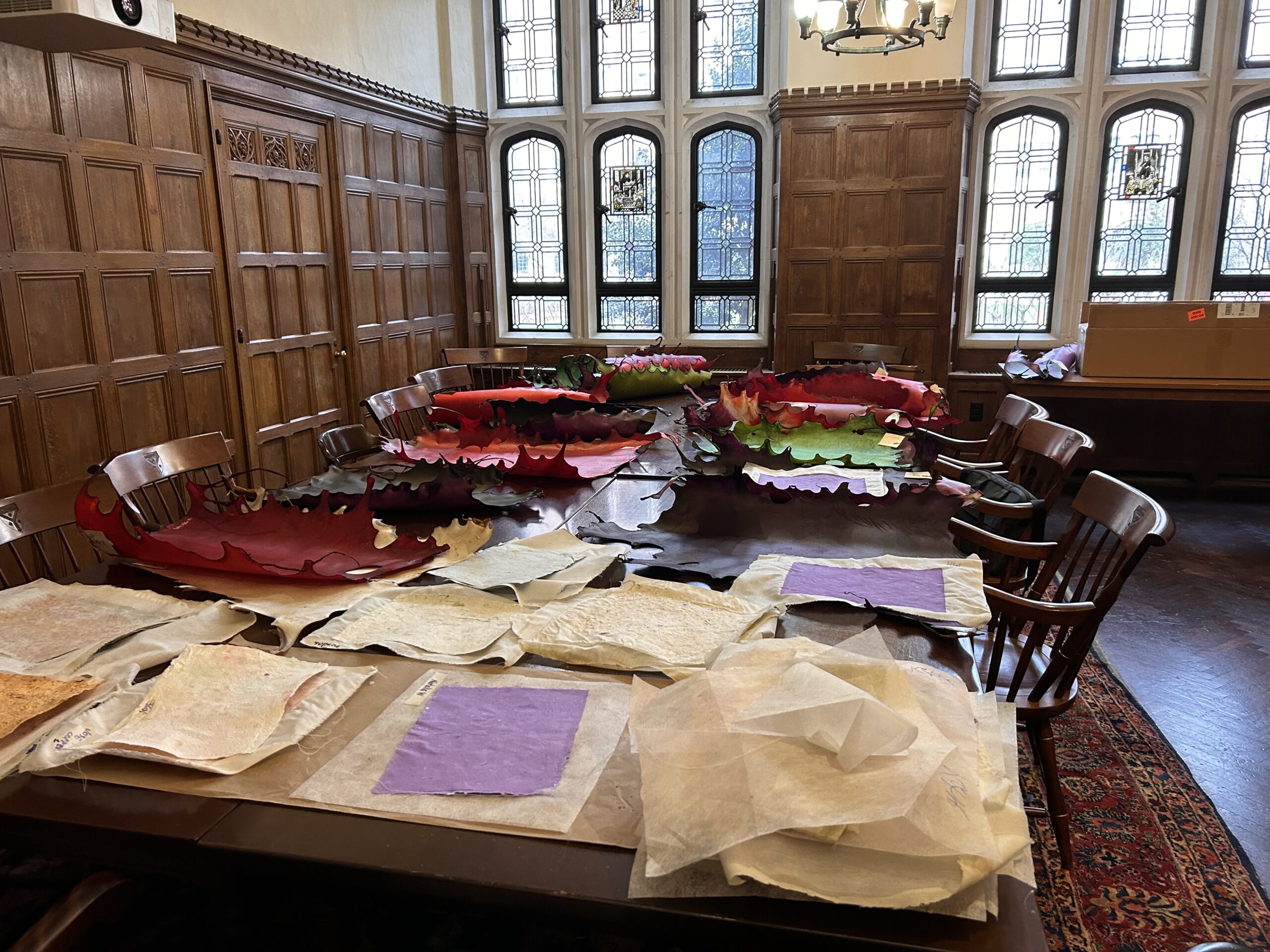
On yet another cold March morning after spring break, John and I laid out all the paper and parchment we had made on a table, preparing to hand out the products of our collective work to the students. The sunlight streaming through the windows on to the wood panels, catching the edges of the parchment, was glimpse into another world. Neo-gothic architecture encasing neo-Renaissance materiality.
The joy of students looking and delighting at their work was palpable.
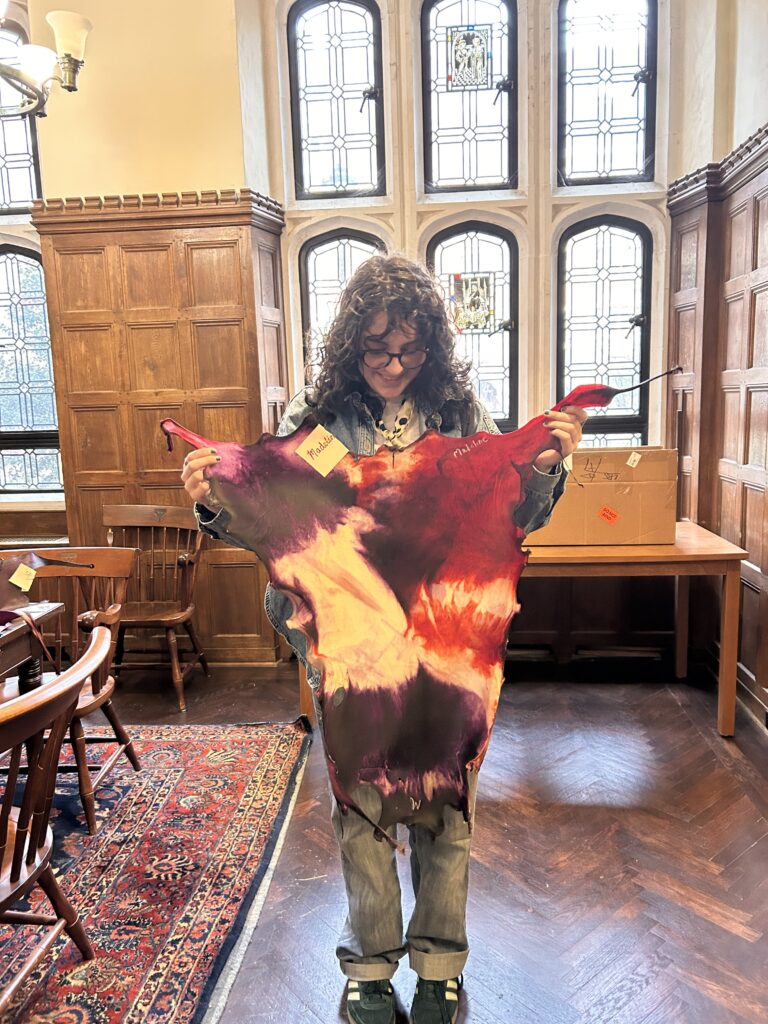
But beyond the “cool” factor and the aesthetic pleasure of these objects, the question that inevitably rises is: what is the purpose of these acts of historical (re)making? Are these antiquarian pursuits, a way of knowing that helps us be connected more closely to historical practices and sensations–and what bearing might be these experiences have on research and teaching across different disciplines? Students can never achieve expertise through a single workshop, however immersive and and engaging it may be, so how can we think about a standard of knowledge that falls short of mastery by a long shot? Is this kind of amateurism valuable within the university–and why?
In his recent work on art and anthropology, Tim Ingold writes about his “ongoing attempt to reunite perception with imagination, understood not as a power of mental representation but rather as a way of entering creatively into the very becoming of things – of moving ‘upstream’ to the moment of their incipient formation.” “Knowing from the inside,” he argues, is transformative for how we see the world and make sense of the relations within it–and this depends on alternative pedagogies. Ned Cooke has argued for the significance of material literacy that are only possible through somatic experience, reconnecting cognitive, abstracted understanding from the knowledge of the hand. But many of these frameworks remain assertive and speculative, based on observation and reports of participants. I wonder though what it would mean to study the nature of attention, different kind of perspection and knowing in conjunction with colleagues in cognitive neuroscience and psychology. It’s a truism that handwork is therapeutic; but how might be study that insight and make it the basis of a new kind of education?