Books
Technologies
Material Histories
Technologies
Material Histories
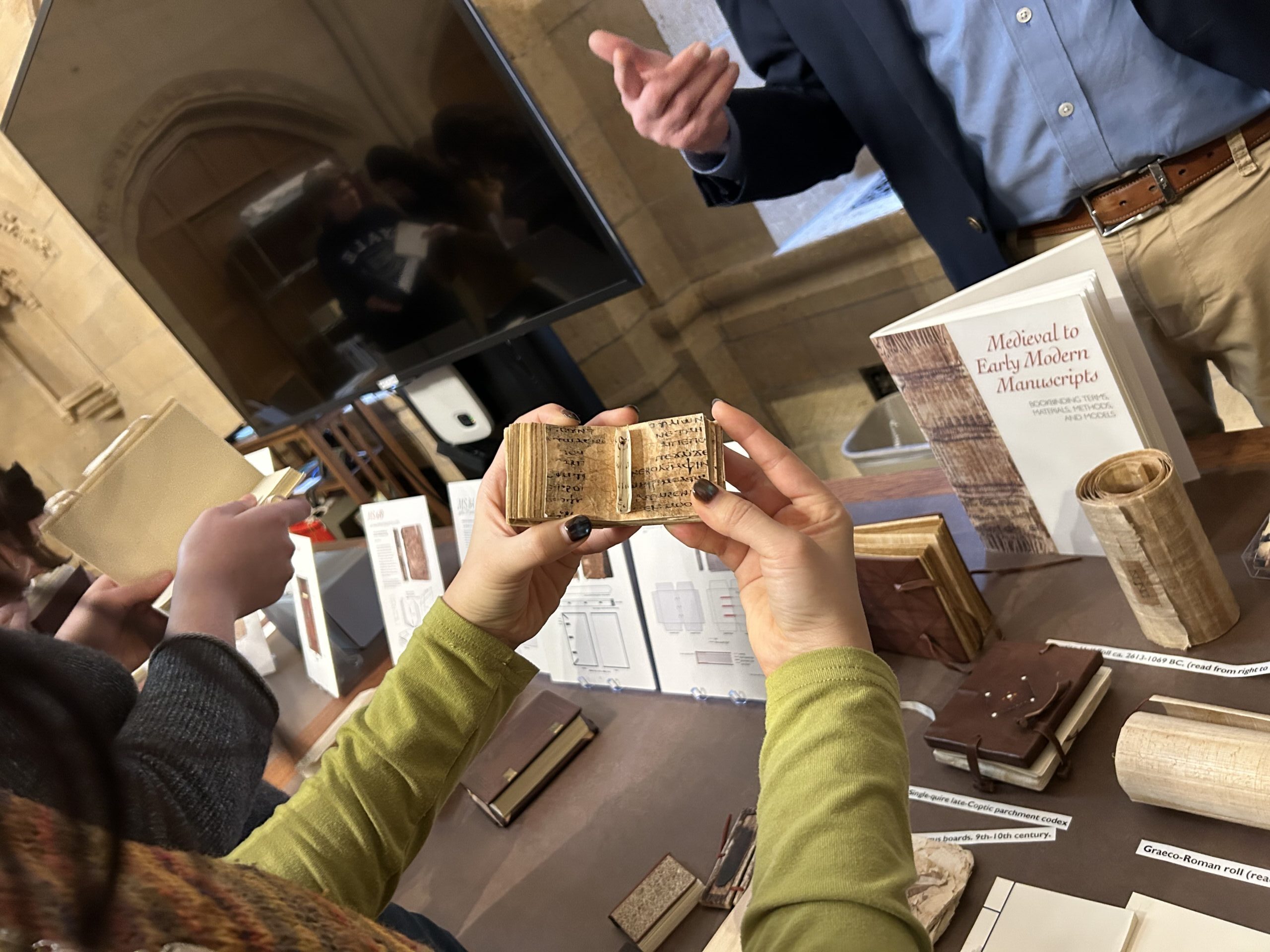
What is a book? Something between covers with pages? Does it need to be bound? Is it an interface, a means of communication, anything that contains information? We begin with a lively discussion of books–what they are, why we struggle to define them, whether they are a technology. From the Greek tekne and logos, a system of craft or skill, a way of making, technology brings together systematic craft knowledge to make things. So what kind of technology is the book — and what is a codex? We practice making scrolls and codices with sheets of the syllabus, feeling the grain of the paper, the way it folds, rolls, resists movement. One person makes a zine, others carefully fold and cut. Then: we examine books in the most material way — we take apart some books I’ve found in the $1 or free pile at Gray Matter Books…
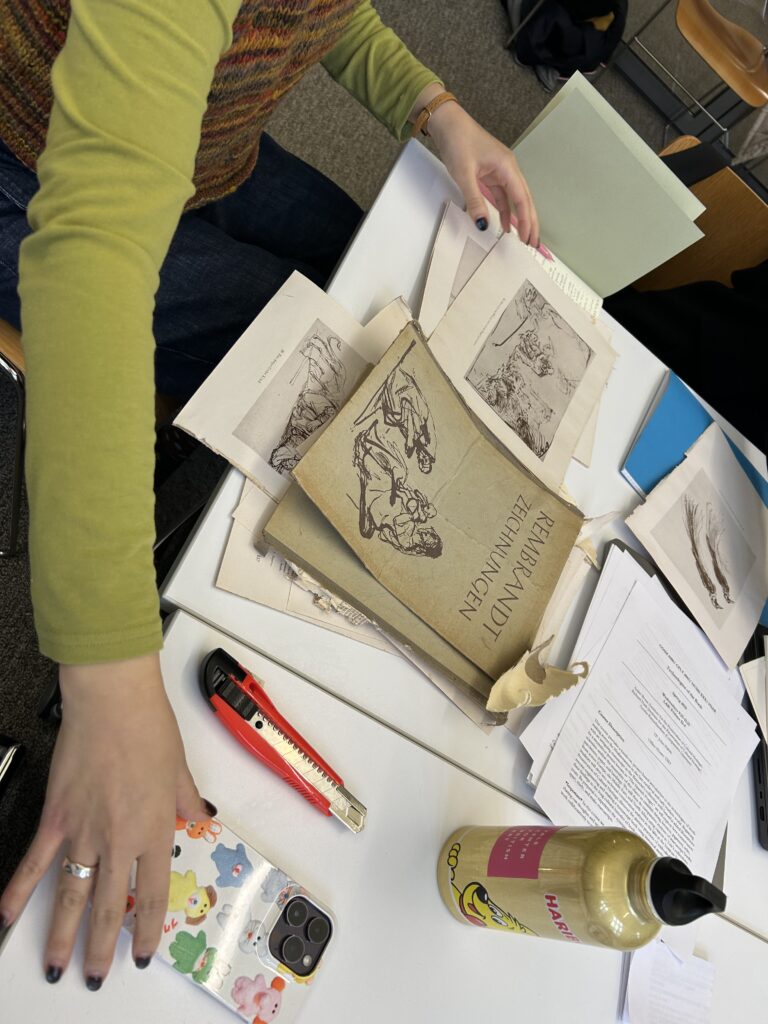
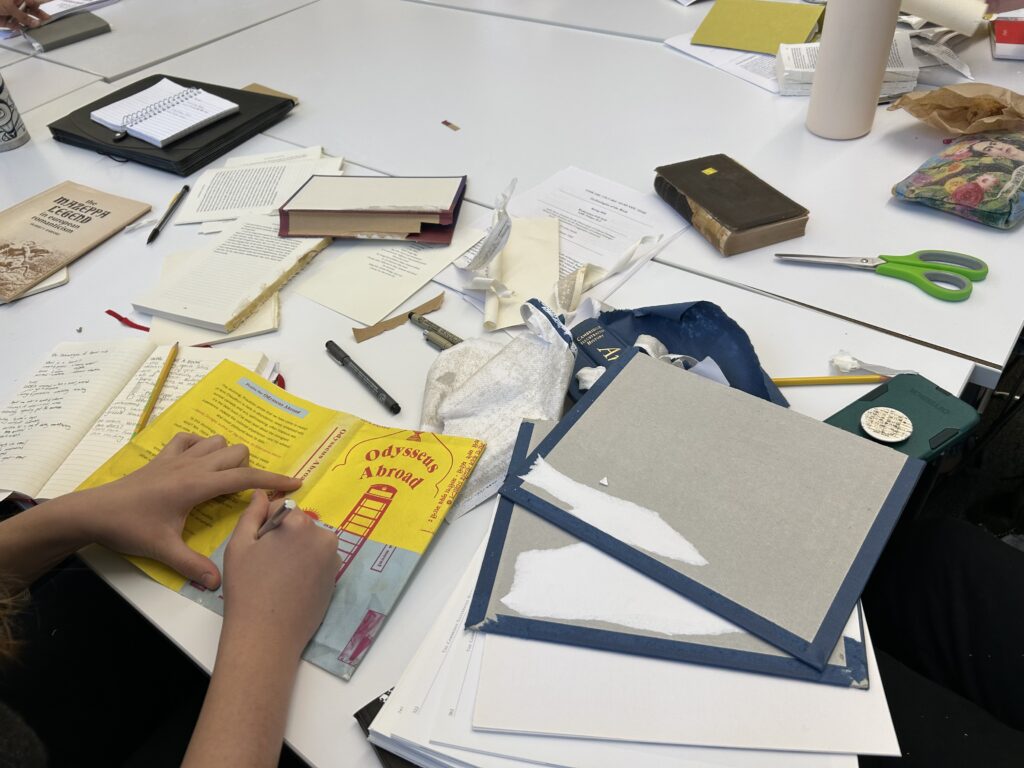
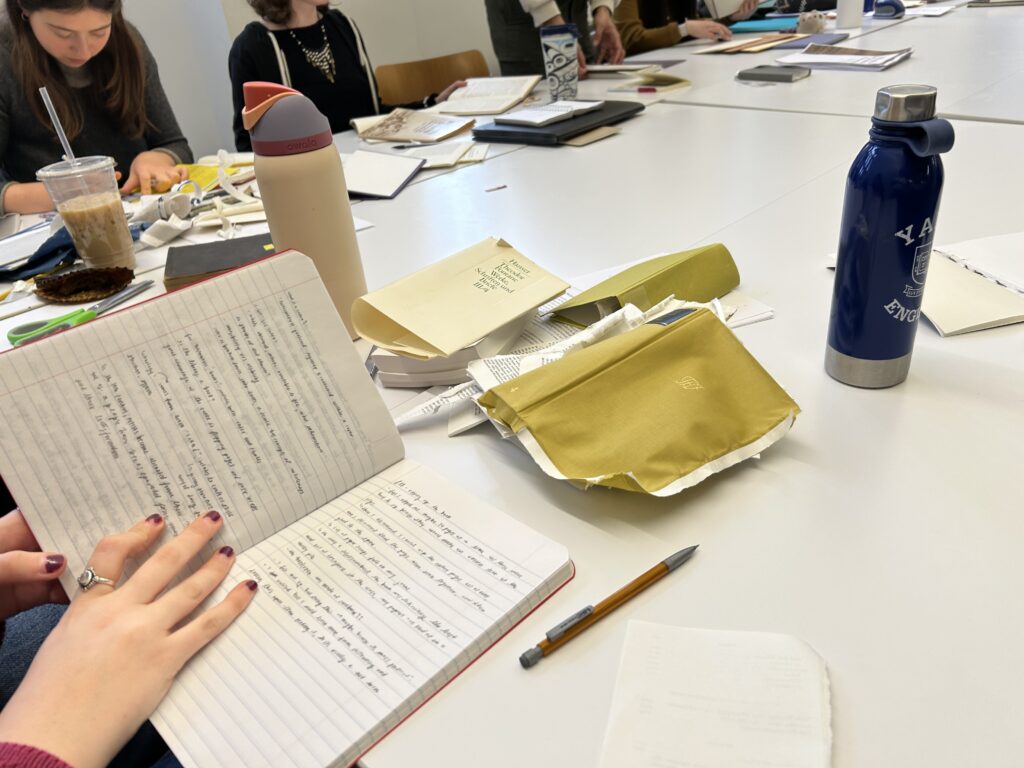
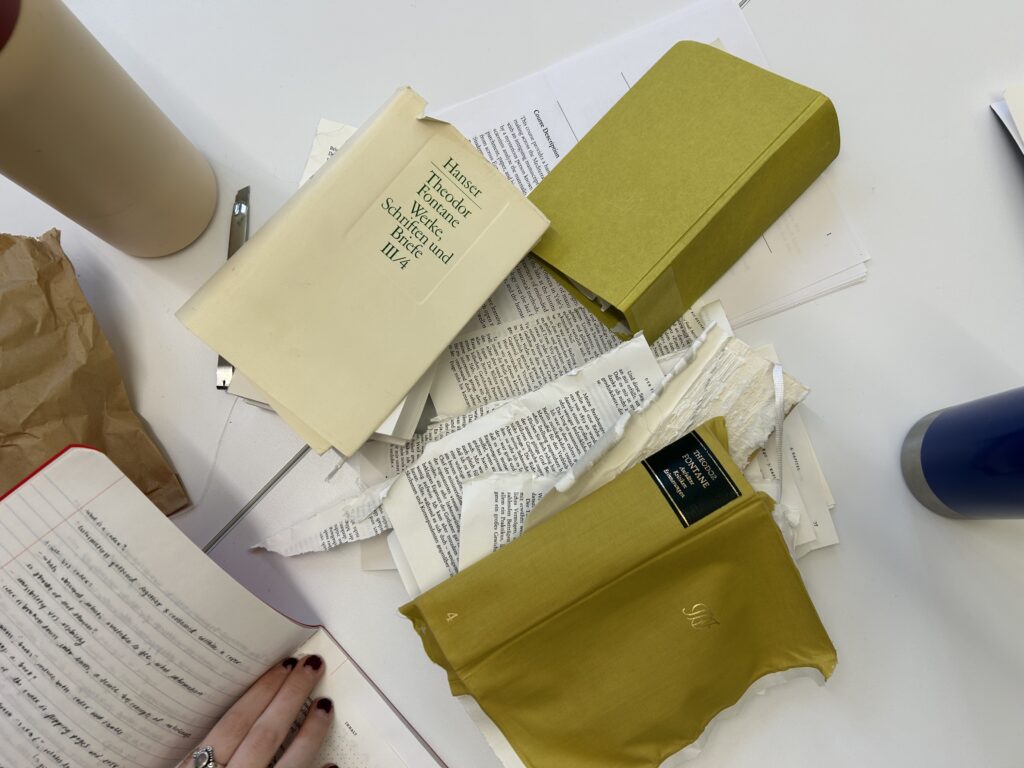
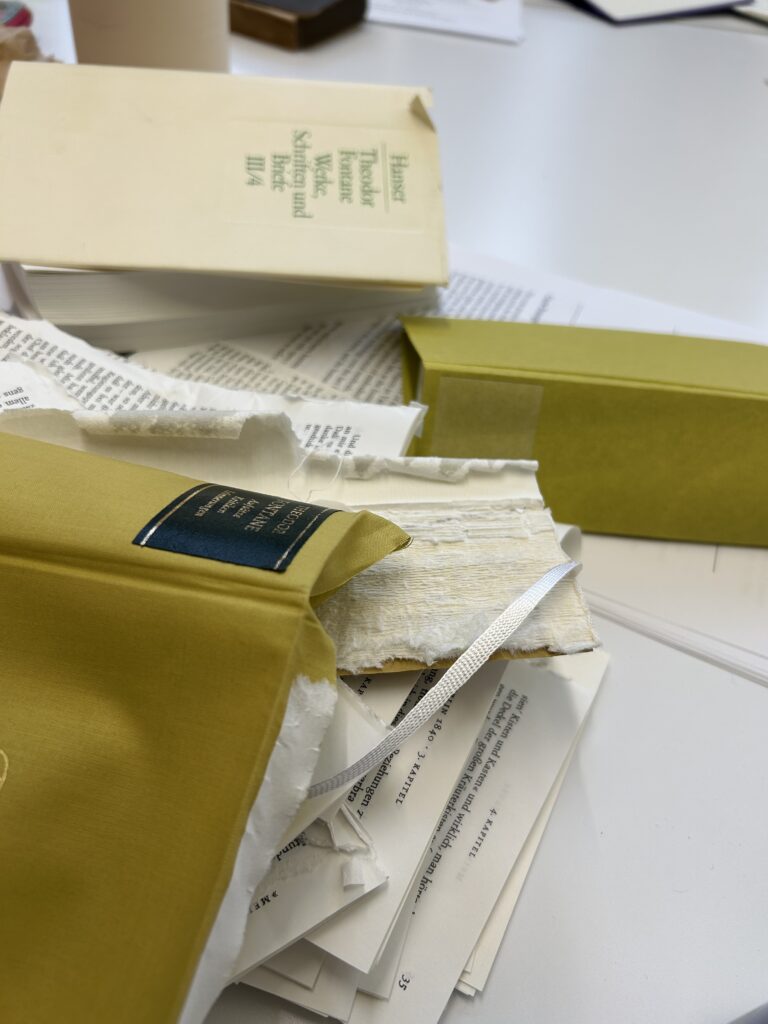
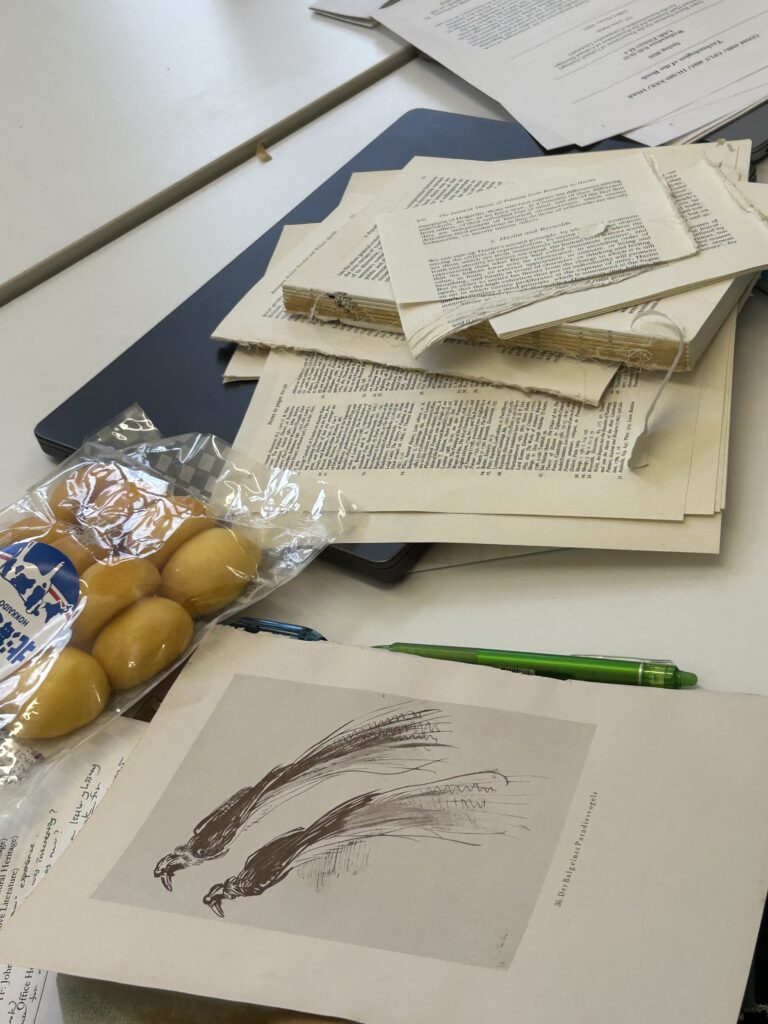
Some are horrified and can’t bear to tear apart their book. Others tear with glee, wrestle with the boards, cut and disbind with abandon. We touch and think about glue, sewing, fake endbands, glossy paper, bookcloth and flimsy cardboard.
Then it’s time to meet the Traveling Scriptorium, an incredible resource put together by our colleagues in Conservation.
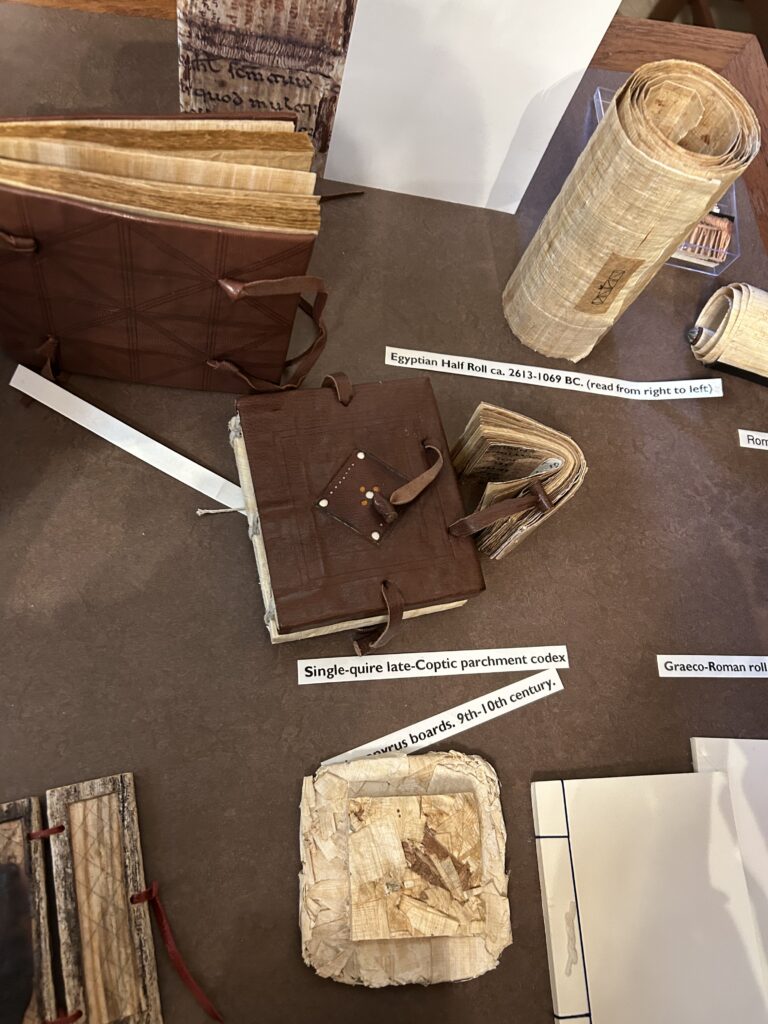
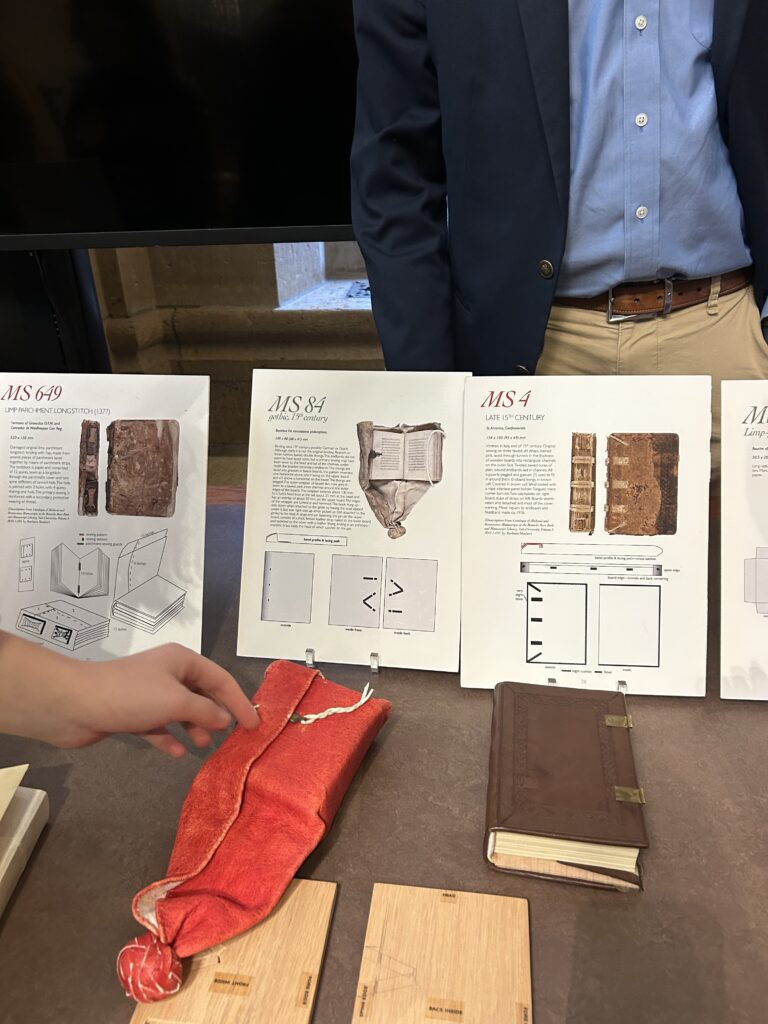
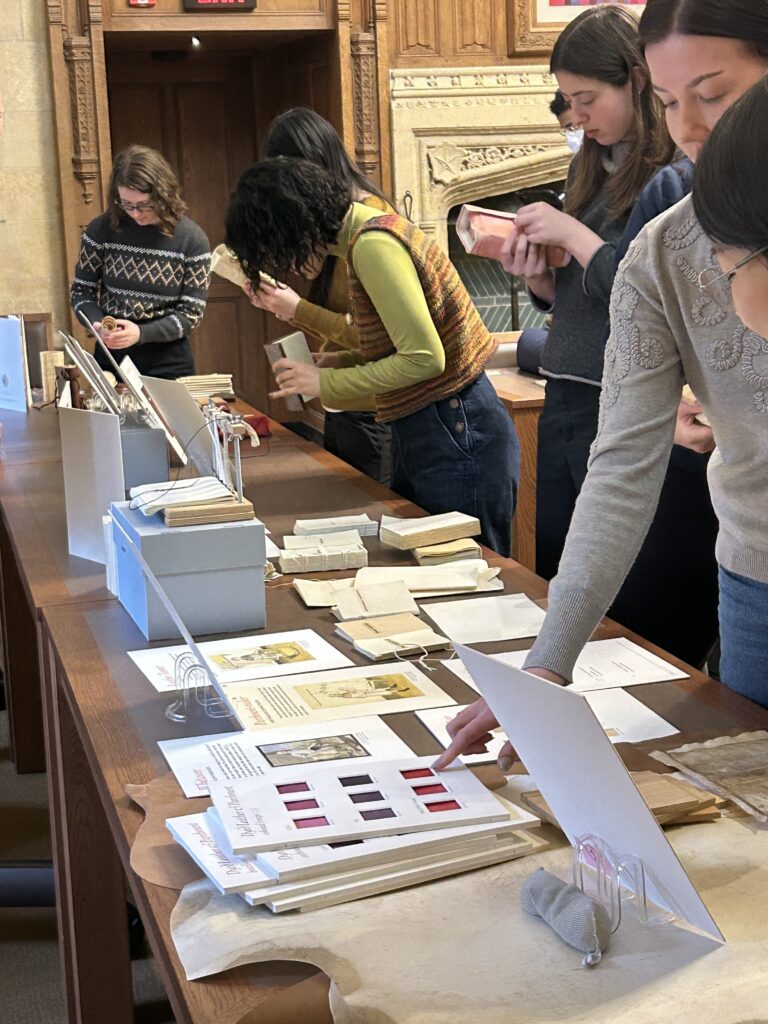
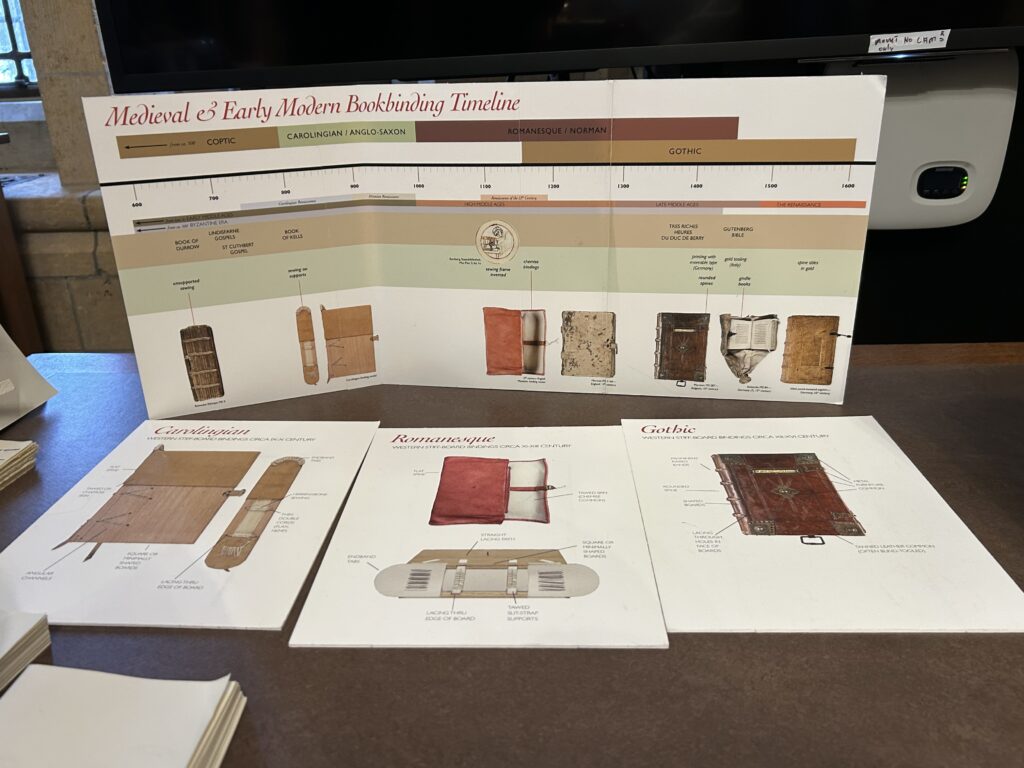
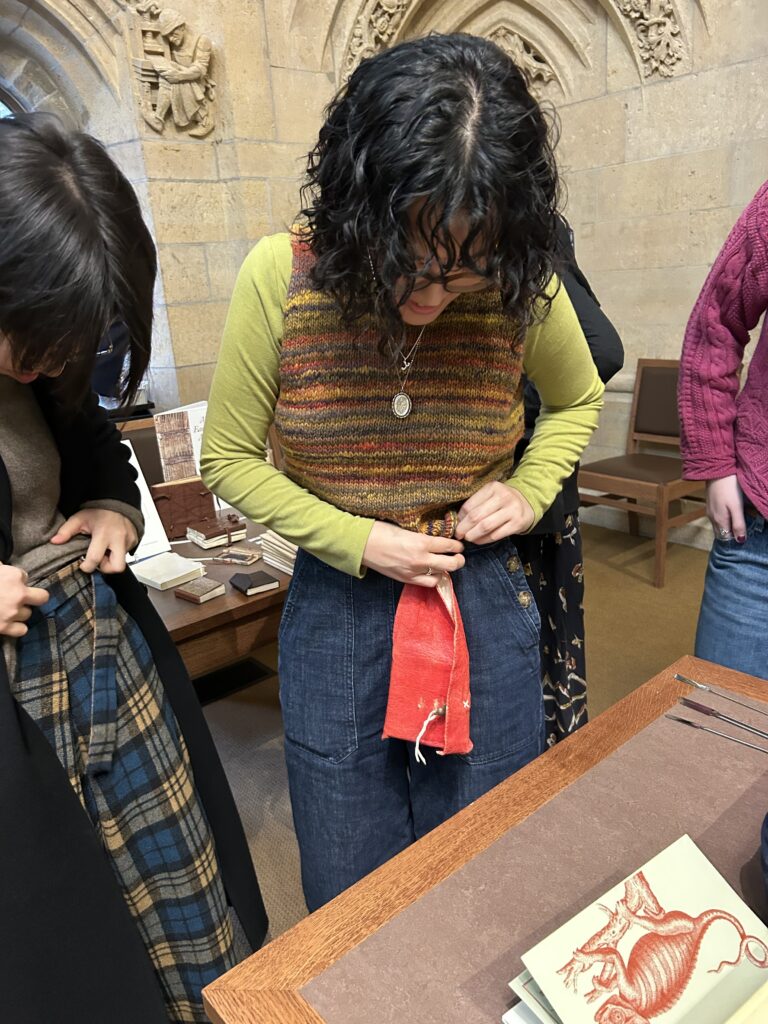
Karen Jutzi gives us a brief history of medieval book structures, using the models she has made for the Traveling Scriptorium. She encourages us to open, handle, use the books…and some try and see if the girdle book really works…
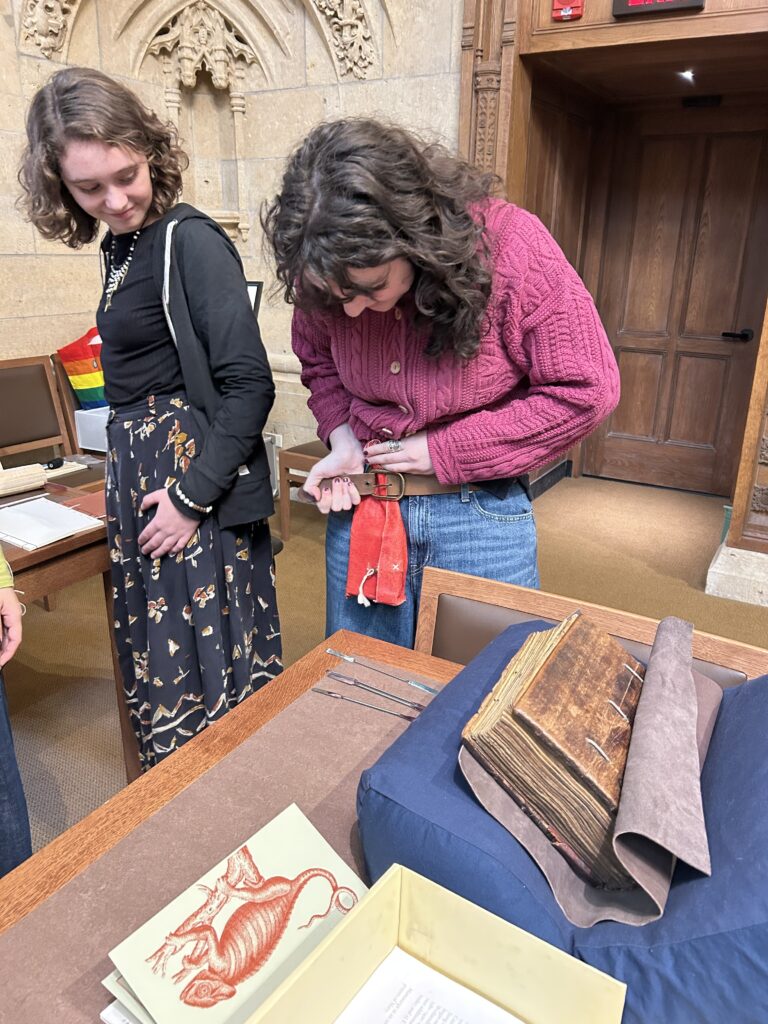
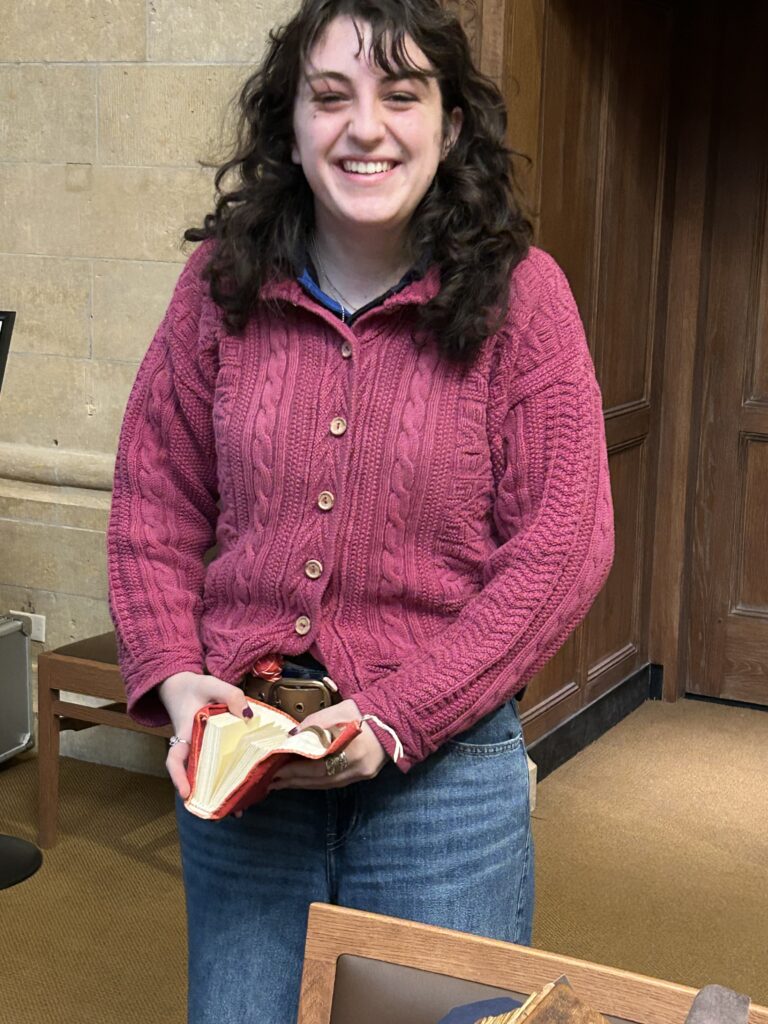
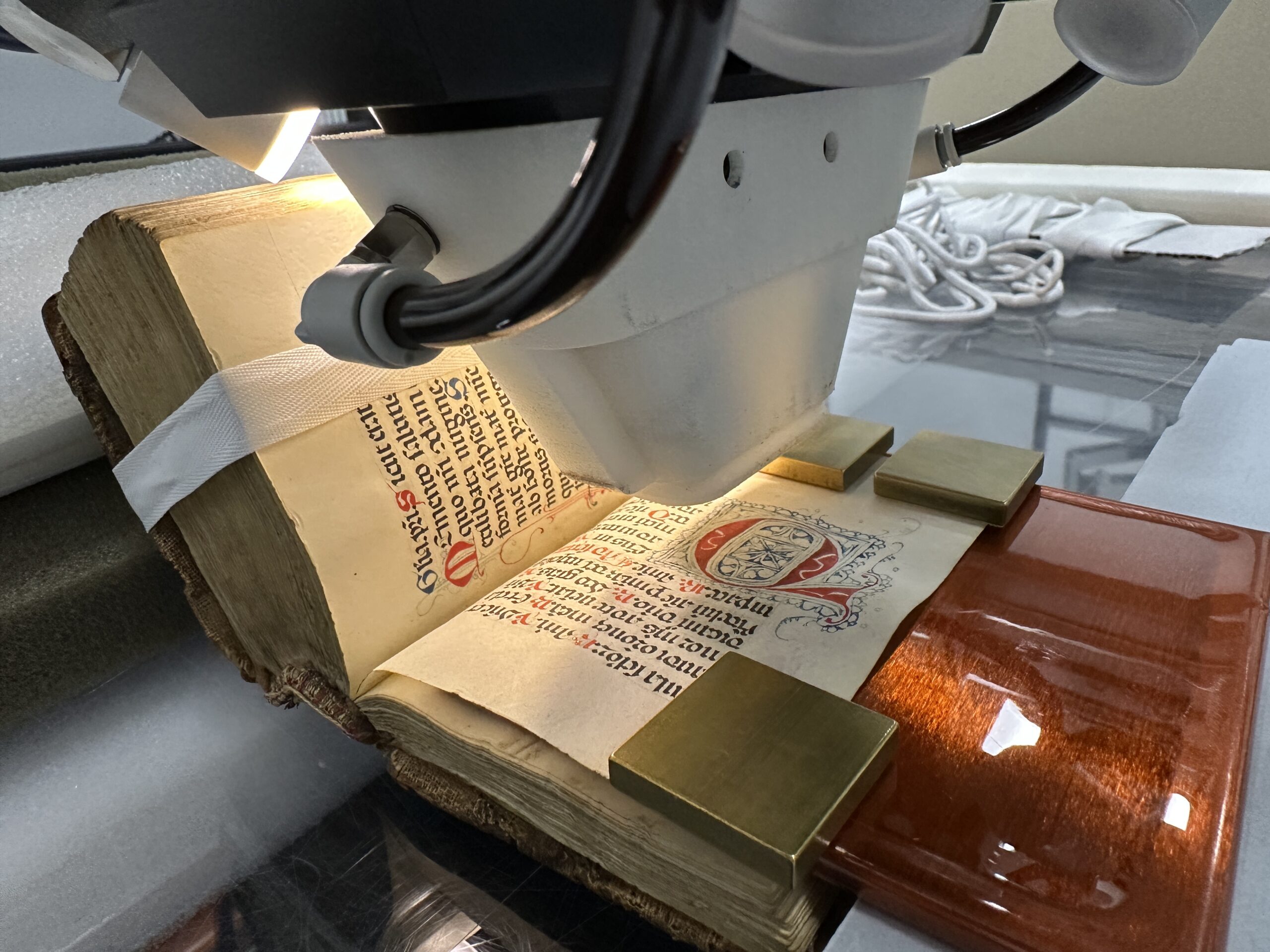
Then it’s time for an in-depth discussion of appropriate handling for our medieval study objects–Paula Zyats helps us understand “how to listen to the book,” Karen adds: “it tells you how to wants to be opened.” We learn about how parchment needs does not like moisture and glue, and how many nineteenth-century rebindings make it very difficult to actually open and read or look at the manuscripts. We speculate about collectors and marvel at the intricacy and acumen of medieval bindings. Paula also explains how “conservation” and “restoration” are very different pursuits–stabilizing a book for continuing use without pretending to return it to some prior pristine state. We talk about how these books carry the history of centuries, strata of use, love, destruction, and remaking.
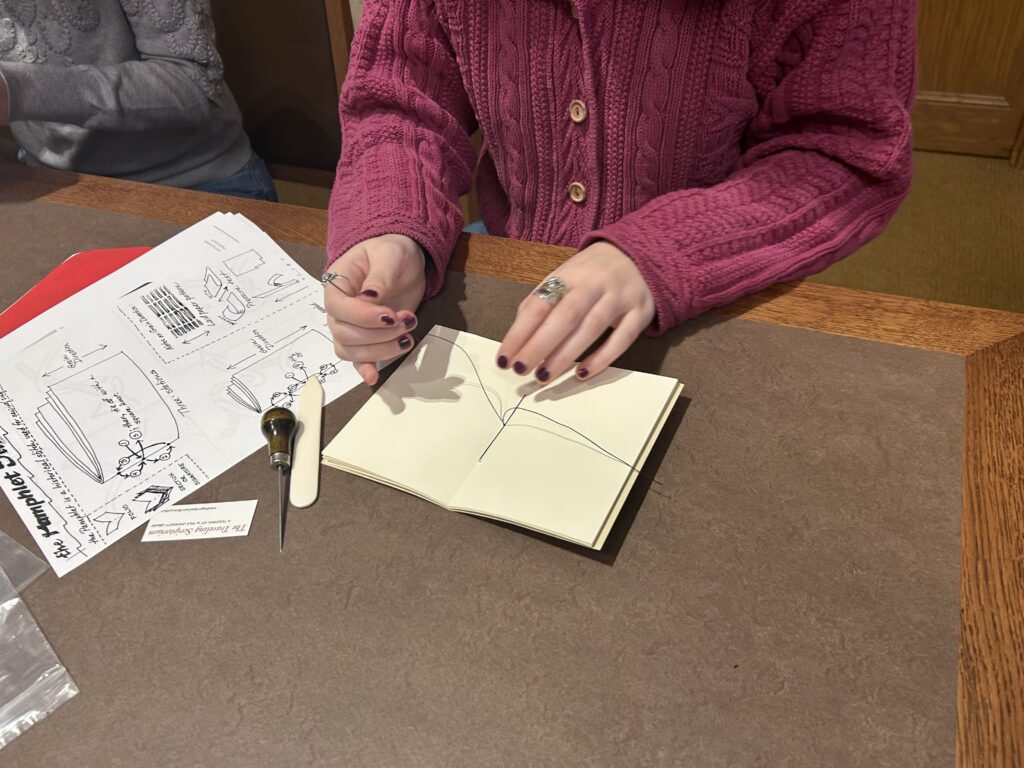
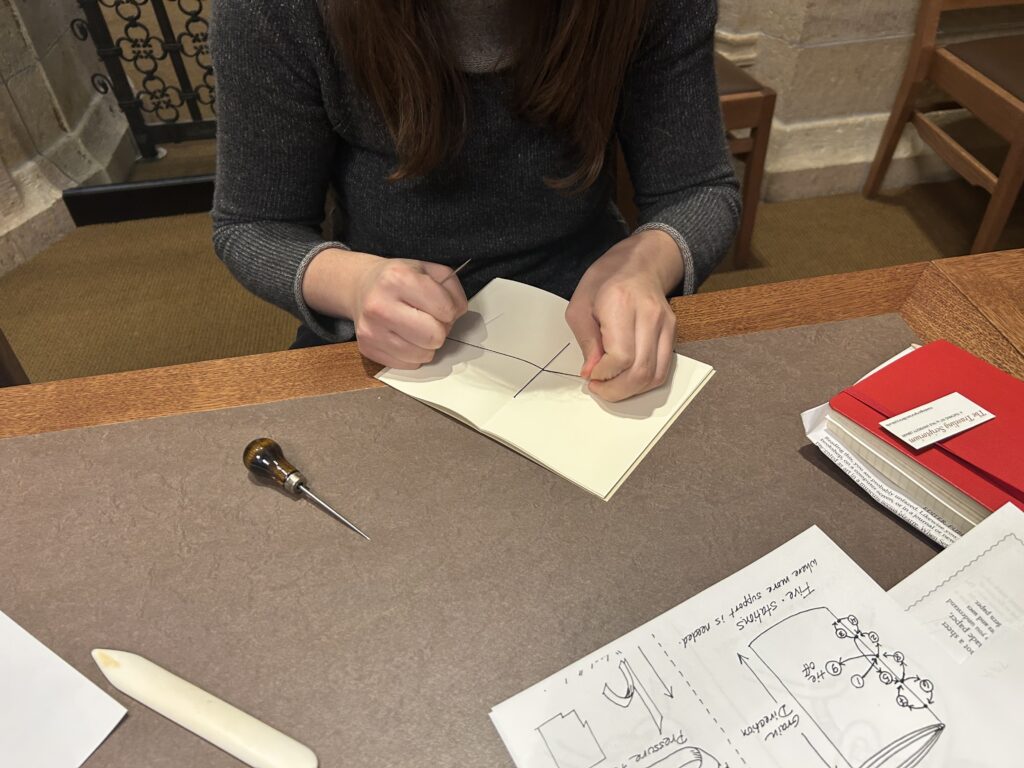
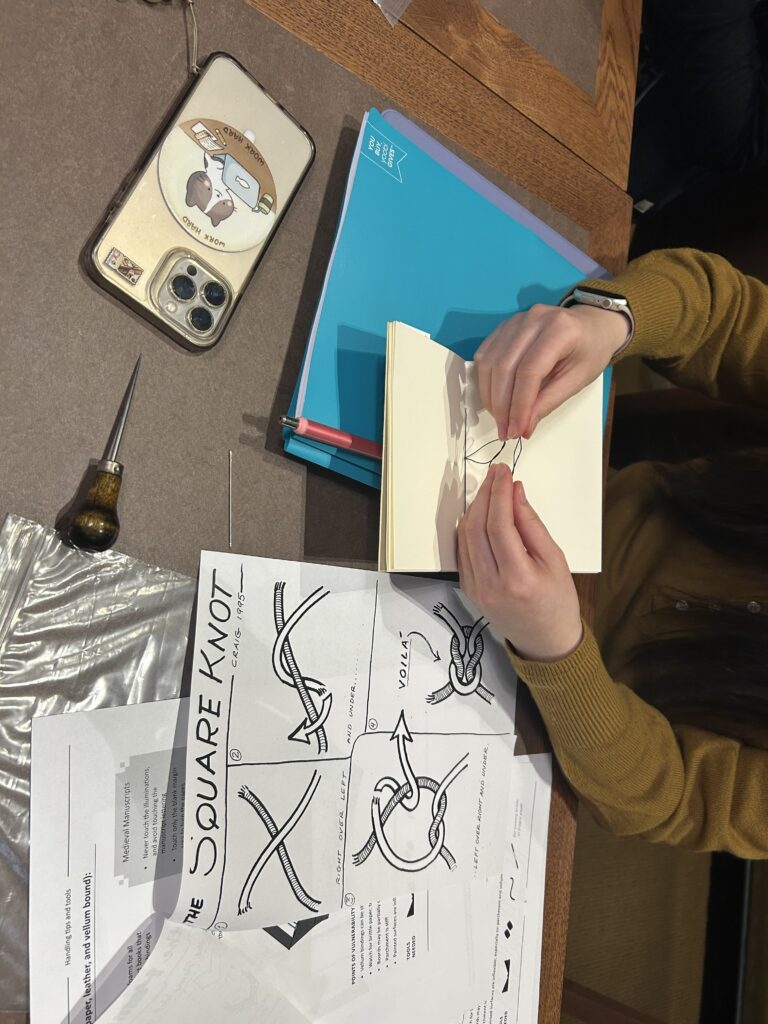
And now to make our own first books! Karen has prepared packets of material for us to make our own sewn pamphlets, with the first stitch a binder must learn to do.